Category Archives: modernity & modernization

Eisenhower Park Cricket Stadium: An Overnight ‘Ali Baba’ Creation

Nagraj Gollapudi, in The Cricket Monthly at ESPNcricinfo, 31 May 2024, where the title reads “New York’s beautiful monster: how a cricket venue was created from scratch”

In Eisenhower Park on the outskirts of the city, a stadium has come up in a race against the clock.

The Cricket World Cup Trophy on display Wednesday March 19, 2024 at Eisenhower Memorial Park in East Meadow.

It was in August of 2023 that Don Lockerbie started to get anxious. The ICC had tasked him, a former chief executive of the United States Cricket Association, now venue development officer for the 2024 men’s T20 World Cup, to find a suitable venue in New York that could host matches in the marquee event.

Continue reading →

1 Comment

Filed under accountability, architects & architecture, architectural innovation, centre-periphery relations, commoditification, cricket for amity, economic processes, ethnicity, heritage, historical interpretation, landscape wondrous, life stories, modernity & modernization, performance, the imaginary and the real, transport and communications, unusual people, world events & processes

The School Thombos in Dutch Ceylon: Their Purpose

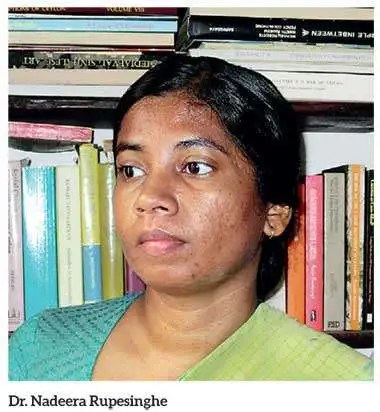
Bente de Leede & Nadeera Rupesinghe, whose article appeared in the  Law and History Review , Volume 41 , Issue 3 , August 2023 , pp. 501 – 521 …. DOI: https://doi.org/10.1017/S0738248022000499 ……. with the full title of the article being thus:  “Registering and Regulating Family Life: The School Thombos in Dutch Sri Lanka”

An Abstract: In eighteenth-century, colonial Sri Lanka, the Dutch church kept extensive registers of the local population. These “school thombos” contain individual registration of baptism, marriage, school attendance and death. This article argues that the school thombos reveal moral control over family life by the Dutch East India Company and the Dutch Reformed Church, while offering locals a legal and religious identity to employ in negotiating the Dutch colonial bureaucracy. These rarely studied registers shed new light on Sri Lankan family history and the practices of Dutch colonialism. What do they tell us about conjunctures of locals with colonial religion in eighteenth-century Sri Lanka? The school thombo was an instrument used to register and regulate family life, with specific functions and uses by different actors. This article explores the format, objectives and use of the school thombo. Why was the school thombo created and who were registered in these sources? What were the micro practices of drawing up the school thombo? The article is supported by several case studies that illustrate how the school thombo found its way into family life while demonstrating the value of written identities.
Continue reading →

Leave a comment

Filed under accountability, British colonialism, cultural transmission, demography, Dutch colonialism, economic processes, education, governance, heritage, historical interpretation, island economy, legal issues, life stories, modernity & modernization, politIcal discourse, self-reflexivity, sri lankan society, travelogue, unusual people, world events & processes

Seismic Shifts in World Power Balance as Xi and Putin Consolidate Ties

Lakshman Gunasekara in Daily News, 21 May 2024, where the title reads thus: “China-Russia summit: pointer to world’s future?” …. with highlighting imposed by The Editor, ThuppahiMo

The sudden death of Iran’s conservative President on Sunday hardly stirred the world community’s focus on Gaza where humanity undergoes a shattering collective experience as never before. Iran’s 63-year-old cleric-President is understood to have died in a sudden, weather-induced helicopter crash while returning from an official programme in Iran’s far western borderlands near Azerbaijan.

Continue reading →

Leave a comment

Filed under accountability, american imperialism, authoritarian regimes, centre-periphery relations, China and Chinese influences, demography, economic processes, ethnicity, governance, historical interpretation, military strategy, modernity & modernization, nationalism, Palestine, politIcal discourse, power politics, security, world events & processes

A Lifetime Addressing Nationalist Political Currents & Zealotry

Michael Roberts

As I attend a friend’s funeral every now and then in Adelaide or receive mail conveying sad tidings re good friends and other acquaintances, I am reminded that I will disappear into the dust in due course relatively soon. So be it.

However there has been a lifetime of endeavour in various fields. One range of activity has been in the academic realm investigating socio-political events and processes in the world …. with particular attention directed towards my home-country Sri Lanka’s affairs.

Continue reading →

1 Comment

Filed under accountability, anti-racism, atrocities, authoritarian regimes, British colonialism, Buddhism, centre-periphery relations, communal relations, cultural transmission, discrimination, disparagement, economic processes, electoral structures, ethnicity, governance, hatan kavi, historical interpretation, insurrections, Islamic fundamentalism, island economy, language policies, Left politics, legal issues, life stories, LTTE, martyrdom, modernity & modernization, Muslims in Lanka, nationalism, parliamentary elections, patriotism, political demonstrations, politIcal discourse, power politics, racism, religious nationalism, self-reflexivity, Sinhala-Tamil Relations, sri lankan society, suicide bombing, Tamil civilians, Tamil Tiger fighters, terrorism, truth as casualty of war, unusual people, vengeance, violence of language, war reportage, world events & processes, zealotry

The Pros & Cons of T20 Cricket Today …. Six-hitting Sleepiness?

Ian Chappell, in  ESPNcricinfo, 5 May 2024 where the title reads “Will T20 get to the point where it becomes wearisome?”

Over the years I’ve learnt that for every upside in an idea – no matter how good – it’s guaranteed there’ll also be a downside. Consequently there’s some disillusionment with the growing amount of six-hitting involved in the T20 game and particularly in the highly successful IPL tournament.

Travis Head hammers a six — AFP/Getty

…. Take this and multiply it some. Still a spectacle? 

Continue reading →

1 Comment

Filed under accountability, Indian Premier League cricket, landscape wondrous, life stories, modernity & modernization, performance, politIcal discourse, self-reflexivity, taking the piss, travelogue, world events & processes

SSC: The Studies in Society & Culture Project, 1992 et seq

SSC PAMPHLET PROJECT

Some of you may remember this project in Sri Lanka in the 1990s directed towards making selected academic articles on the history & politics of Sri Lanka available to the English-reading public at affordable rates. My unreliable memory indicates that the personnel behind this enterprise were myself, Ananda Chittampalam, Willa Wickramasinghe and our engine, so to speak, was the press operated by Haris Hulugalla.

Continue reading →

Leave a comment

Filed under accountability, anti-racism, British colonialism, caste issues, centre-periphery relations, chauvinism, communal relations, democratic measures, economic processes, education policy, ethnicity, fundamentalism, governance, heritage, historical interpretation, Indian Ocean politics, island economy, JVP, landscape wondrous, language policies, Left politics, life stories, modernity & modernization, nationalism, parliamentary elections, patriotism, photography, plantations, political demonstrations, politIcal discourse, press freedom & censorship, racist thinking, religious nationalism, Sinhala-Tamil Relations, sri lankan society, Tamil civilians, terrorism, violence of language, world events & processes, zealotry

The Global Contest for Influence/Power

Fair Dinkum

What is astonishing is that while China and Europe are doing trade to the tune of 783 billion, the US and NATO  are waging war to the combined tune of 500 billion. One is about construction,  the other destruction. One is about peaceful cooperation,  the other is about perpetual war.

The 500 billion from the US/NATO has all gone up in smoke with 500,000 dead Ukrainians and about 100,000 dead Russians (rough estimates), and the loss of Ukraine looming on the horizon.

Continue reading →

Leave a comment

Filed under accountability, american imperialism, China and Chinese influences, disparagement, economic processes, foreign policy, governance, historical interpretation, Indian Ocean politics, modernity & modernization, Pacific Ocean politics, politIcal discourse, power politics, transport and communications, truth as casualty of war, world events & processes

Amiable Academic Reciprocities: Peebles & Roberts, 1970

Michael Roberts

The academic world and its scholarship is marked by cooperative work as well as animosities and rivalry – whether personal or based on political affiliations. The Sri Lankan scenario was/is no different. As I participated in this environment as a lecturer in History at Peradeniya University,[1] I was extremely fortunate in: (A) benefitting from a salubrious physical setting and a favourable arrangement of buildings and a super library; and (B) a bunch of dons who were as inspiring as amiable –so that the “Senior Common Room’ in the Faculty of Arts was not only a spot for invigorating tea, but also a site for the exchange of ideas.

Continue reading →

3 Comments

Filed under accountability, British colonialism, centre-periphery relations, communal relations, cultural transmission, education, ethnicity, historical interpretation, island economy, land policies, language policies, Left politics, life stories, modernity & modernization, nationalism, plantations, plural society, politIcal discourse, power politics, self-reflexivity, Sinhala-Tamil Relations, sri lankan society, teaching profession, transport and communications

The Royal-Thomian: Yesterday & Today

Uditha Devapriya & Uthpala Wijesuriya, in https://scroll.in/where the title reads thus: “Cricket, class and baila: The many layers of Sri Lanka’s celebrated Royal Thomian sports encounter”

With an unbroken 145-year streak, the face-off between two of the island-nation’s oldest schools has become a cultural rite of passage for the nation’s elite.

Prefects leading a cheer at the 144th Royal Thomian, 2023. |

Uthpala & Uditha … in match fervour

Continue reading →

Leave a comment

Filed under accountability, art & allure bewitching, British colonialism, Colombo and Its Spaces, cricket for amity, cultural transmission, education, heritage, historical interpretation, landscape wondrous, life stories, modernity & modernization, patriotism, performance, politIcal discourse, propaganda, Royal College, S. Thomas College, Sri Lankan cricket, sri lankan society, tolerance

Sri Lanka in Cavernous Economic Chasm

Ahilan Kadirgamar in Q and A with Hans Dembowski …. in Q and A at https://www.dandc.eu/en/contributors/ahilan-kadirgamar


Sri Lanka’s government defaulted in April 2022. How is the economy doing today?
The situation is dire. Sri Lanka’s GDP contracted by 7.8 % last year and is contracting this year as well. Some 500,000 formal-sector jobs have been lost. Another 1 million informal jobs were lost in the construction sector. Cost of living has risen by over 70 % with the crisis. According to the World Bank, the poverty rate doubled to 25 % last year, and the UNDP reckons that multidimensional poverty now affects over half of our people. Multidimensional poverty takes account of things like child mortality, nutrition, school attendance and consumption patterns.

Continue reading →

Leave a comment

Filed under accountability, centre-periphery relations, economic processes, governance, historical interpretation, island economy, legal issues, life stories, modernity & modernization, politIcal discourse, power politics, security, self-reflexivity, Sri Lankan scoiety, welfare & philanthophy, world events & processes