Category Archives: literary achievements

Rendering Sinhala Poetry Fertile — Ranjini Obeyesekere

Laleen Jayamanne, in a review article, Sunday Island, 2 April 2017, where the title is “Sinhala Poetry Translated by Ranjini Obeyesekere”

Ranjini Obeyesekere has brought together a wide-ranging translation of Sinhala poetry making it accessible to an English-speaking readership. This in itself is an admirable achievement. While the book includes a cluster of poems from the older folk tradition, the majority of poems span the 20th century. The volume is attractive in that the layout, with its generous spacing of the stanzas, allows the poems to breathe with great amplitude. Poetry, as the art of suggestion and in direction, which abandons the functional, instrumental, rationalist use of language, is allowed the silences and pacing (spacing) that are so important to it. Vijitha Yapa Publishing should be commended for its sensitivity to form and for the quality of this volume of poetry – it feels good to hold this book and turn its pages. Continue reading

Leave a comment

Filed under art & allure bewitching, cultural transmission, female empowerment, heritage, landscape wondrous, life stories, literary achievements, self-reflexivity, sri lankan society, the imaginary and the real, unusual people

LLRC advocated Bilingual National Anthem and Other Cultural Paths towards Reconciliation

llrc-22

National Anthem

8.291 Several views were expressed concerning the use of the National Anthem as a unifying factor, and in bringing about greater understanding among the communities. One view was that it would be advisable to reflect the two national languages policy by symbolically introducing at least two lines in Tamil to the National Anthem.172 It was pointed out that this would be a major step towards healing the wounds of the past.

Continue reading

1 Comment

Filed under cultural transmission, education, ethnicity, governance, heritage, historical interpretation, landscape wondrous, literary achievements, patriotism

Vale Jim Gair, Sinhala Enthusiast, Linguist Extraordinary

A Valedictory in American Academia

jim-gair-11

James Wells Gair, Ph.D. ’63, professor emeritus of linguistics who throughout a long and distinguished career produced groundbreaking work on South Asian languages and their relation to other languages, died Dec. 10 in Ithaca. He was 88.“Jim Gair was in many ways the paradigmatic Cornell linguist,” said John Whitman, chair and professor of linguistics. “He had a language passion for Sinhala, the language of Sri Lanka, and he threw himself entirely into it, teaching the language, writing textbooks for its learners, and analyzing both the colloquial language and its classical texts.

Continue reading

3 Comments

Filed under cultural transmission, education, heritage, Indian traditions, landscape wondrous, life stories, literary achievements, performance, self-reflexivity, sri lankan society, teaching profession, unusual people, world affairs

Sinhalaness in the Middle Period and in Wars Against Colonial Intrusions

Chris Speldewinde, in the The Australian Journal of Anthropology, vol. r19, No. 1, 2008, reviewing  Michael Roberts. Sinhala Consciousness in the Kandyan Period 1590s to 1815. Colombo 4, Sri Lanka: Vijitha Yapa Publications. 2004. Pp.xx +274, bibliog., index. US$60.00 (He), ISBN 955-8095-31-1.

Having spent a considerable period during my undergraduate studies of anthropology concentrating on cultural aspects of Sri Lankan society, I was enthusiastic to have been given the opportunity to read and review this work by Michael Roberts. In this latest addition to his many volumes of work on his native Sri Lanka, Roberts, has provided a rich tapestry of the period pre-dating the formalisation of British colonial rule on the island of Sri Lanka. He examines the forms of reaction of a society affected by migrating Indians from the north and European colonial expansion, beginning with the arrival of the Portuguese in the mid-sixteenth century and later, the Dutch and the British. This book provides a considerable amount of both historiographical and ethnographic material, from a wide range of sources to keep the reader engrossed in the development of distinct ethnic identities on this island nation. The use of verbal history passed on through poems and songs from the period is used extensively to substantiate Roberts’ theories of the development of a definitive Sinhalese ethnic identity.

p1

Continue reading

2 Comments

Filed under authoritarian regimes, British colonialism, British imperialism, cultural transmission, economic processes, heritage, historical interpretation, island economy, landscape wondrous, law of armed conflict, life stories, literary achievements, military strategy, modernity & modernization, patriotism, politIcal discourse, Portuguese in Indian Ocean, power politics, religiosity, security, self-reflexivity, sri lankan society, transport and communications, world events & processes

Two Sri Lankan Tamil Voices from the North Today

Frances Bulathsinghala, courtesy of Daily FT, 5 August 2016, where the title reads “Post-war voices from the north.” The emphases in highlighted colours, however, are additions by The Editor, Thuppahi

Jaffna, Kilinochchi, Mullaitivu: Rajini is 46 years old and an ex-LTTE Commander with a 10-year-old daughter. She is a widow. She has few visitors. Tamil politicians are rarely among them.  Occasionally she chases off military officers who enter her premises in her absence and make themselves at home for hours in her garden. She flies into a rage at them. She informs them that they have no right to enter her garden in her absence. They accept, grin, make some lame excuses and good-naturedly lope off after the cursory examination of the military reference documentation that is as important for ex-militants in post-war times as it was for civilians in peace times. 

It is peace. At least there is no gunfire now. Of the memories of fire that continue to burn in hearts and minds we do not know.

fb-ranjini

Continue reading

1 Comment

Filed under accountability, authoritarian regimes, communal relations, cultural transmission, economic processes, Eelam, ethnicity, female empowerment, governance, historical interpretation, human rights, IDP camps, landscape wondrous, legal issues, life stories, literary achievements, nationalism, politIcal discourse, power politics, Rajapaksa regime, self-reflexivity, Sinhala-Tamil Relations, sri lankan society, Tamil civilians, Tamil Tiger fighters, tolerance, trauma, truth as casualty of war, war crimes, war reportage

Leonard Woolf, The Anti-Imperialist

Thiru Arumugam, Courtesy of The Ceylankan: Journal of the Ceylon Society of Australia, journal 76, Vol. XIX, 4 November 2016

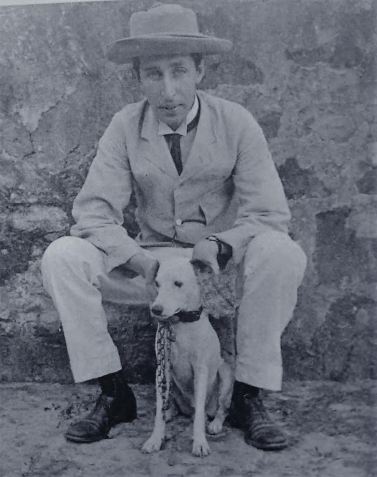
aawoolf-dogWoolf and his dog “Charles” in Jaffna

Introduction: The Ceylankan has carried three articles about Leonard Woolf. In the May 2004 issue Vama Vamadevan wrote an article titled Leonard Woolf  which mainly covered Woolf’s years in Ceylon (1904-1910). In the November 2004 issue Yasmine Gooneratne wrote an article titled Lone Woolf in which she presents a scholarly analysis of Woolf’s book Village in the Jungle and describes a forthcoming new edition of the book with misprints in the first (1913) edition corrected and excised passages restored. Yasmine’s article mentions Leonards “patient devotion with which he had nursed Virginia Woolf through her spells of mental illness, thereby guaranteeing to the world the emergence of its foremost female literary genius”.  Finally, in the February 2009 issue Philip Sansoni wrote an article titled Leonard Woolf – The Lonely Cadet and the Maiden in which he describes in great detail Woolf’s affair in Jaffna with Kitty Leyden. Woolf in the second volume of his autobiography1 says briefly that it was only a one-night stand where he lost his virginity, which had survived his days at Cambridge. However, in a letter to his good friend Lytton Strachey in England dated 12 November 1905written from Jaffna, Woolf said something more “… what do you think of my new one alone with a burgher concubine in a long whitewashed bungalow overlooking a lagoon, where time is only divided between reading Voltaire on the immense verandah and copulating in the vast and empty rooms …” Continue reading

2 Comments

Filed under British imperialism, caste issues, cultural transmission, governance, heritage, historical interpretation, island economy, landscape wondrous, life stories, literary achievements, modernity & modernization, politIcal discourse, self-reflexivity, sri lankan society, the imaginary and the real, unusual people, world events & processes

Leonard Woolf as a Judge in Ceylon

Prabath de Silva

“I welcome the publication of this second and revised edition of Prabhath de Silva’s book on the judicial work of Leonard Woolf, who tried many civil and criminal court cases when serving as a member of the Ceylon Civil Service at Hambantota from 1908 to 1911.  De Silva has taken pains to collect extensive evidence from many sources, including Woolf’s official diary, his autobiography, manuscripts found in the record room of Hambantota District Court, and his famous novel, The Village in the Jungle.  These sources are woven together to provide a vivid account of Woolf’s approach to law and justice.  In this new edition, de Silva has expanded his use of foreign and local secondary sources in order to place Woolf’s judicial work in a wider context.  De Silva’s analysis shows that Woolf’s distinctive personality affected the way he approached the cases he heard.  At the same time, the book also has wider implications for understanding colonial justice and the ideological foundations of British rule in Ceylon.”  Foreword by Dr.John D. Rogers:

a21 Woolf with Hambantota kachcheri staff Mudaliyars, Muhandiram and Engelbrecht

Continue reading

8 Comments

Filed under accountability, British colonialism, cultural transmission, governance, heritage, historical interpretation, landscape wondrous, legal issues, life stories, literary achievements, modernity & modernization, politIcal discourse, power politics, social justice, sri lankan society, unusual people, world affairs

Leonard Woolf as An Accidental Civil Servant in Ceylon

addendum:Joe Kovacs in Literary Traveller,  23 June 2005, …. http://www.literarytraveler.com/articles/leonard_woolf_ceylon/ where the title runs The Accidental British Servant: Leonard Woolf in Ceylon”

When I joined the Peace Corps and went to Sri Lanka in 1997, I took a leave of absence from a graduate program in English literature at Fordham University. I was unhappy with academia as an aspiring creative writer; I wanted to make literature, not analyze it. I had no idea how international development work in Asia could help, but at least it would provide a long-overdue vacation from education. I’d never left the United States before, and after an exhausting trip west from New York through San Francisco, Tokyo and Bangkok, the third flight of my trans-global journey arrived in the Sri Lankan capital of Colombo at two in the morning. I spent the rest of those benighted, pre-dawn hours in a retreat center in the jungle, trying to sleep. But the dense heat drenched me in sweat, even as I lay still in bed, the uncompromising mattress made my back sore and a swooping blue mosquito net left me entombed. Had I just made a mistake? From the jungle outside came a sudden high-pitched screech, convincing me that I’d come to a land of monsters. llw-222 lw-11

Continue reading

1 Comment

Filed under accountability, american imperialism, cultural transmission, governance, heritage, historical interpretation, Indian Ocean politics, landscape wondrous, life stories, literary achievements, modernity & modernization, news fabrication, performance, politIcal discourse, self-reflexivity, Sinhala-Tamil Relations, slanted reportage, sri lankan society, the imaginary and the real, travelogue, world events & processes

Skandakumar visits Victor Melder’s Treasure Trove

OLYMPUS DIGITAL CAMERA

The Sri Lankan High Commissioner to Australia, H. E. Mr Somasundaram Skandakumar, in the company of Mr W.G.S. Prasanna, Sri Lanka Consul General in Melbourne, paid a Courtesy call to the ‘Victor Melder Sri Lanka Library’, situated at my home, to acquaint themselves with Victor randolph Melder’s untiring efforts in promoting Sri Lanka in Australia.This library has been in existence for 48 years and has grown from one publication to over 5,000 today and is a store house of information on Sri Lanka.

Continue reading

Leave a comment

Filed under cultural transmission, education, heritage, landscape wondrous, life stories, literary achievements, patriotism, politIcal discourse, sri lankan society, the imaginary and the real, unusual people

The Rajasingams and Their Profound Legacies

Rajan Hoole, being the text of speech delivered at Trimmer Hall, Jaffna, 22 September 2016… and reproduced in the Daily News with the title “The Rajasingam Legacy: A Quest for Quality”

  rajasinghamsin1990parentsofdrrajani aaa-rajasingambavinck-rajasingham

After nightfall on 21st September 1989, Rajasingam Master called on his bicycle at my mother’s home quite unexpectedly and delivered his pithy message, “Rajini has been shot.” His voice showed no evident emotion. After a brief exchange of words, he turned back. He was stoic, incorruptible, who lived by his strong sense of duty. Master, his wife MahilaAcca, and their daughters, Nirmala, Rajini, Sumathy and Vasuki were familiar to us from childhood days in the St. James’ Church choir. Had Master been more ambitious during his university days, he would have left his mark as an outstanding mathematician in our university. What he did as a school master at Hartley and Jaffna College was no less important. His zeal for catching hold of students who seemed to be in need of inspiration and getting them to work Mathematics problems remained a passion with him to the end of his life.  rajani-t Rajani Thiranagama nee Rajasingam

Continue reading

3 Comments

Filed under authoritarian regimes, citizen journalism, communal relations, cultural transmission, education, female empowerment, historical interpretation, human rights, landscape wondrous, life stories, literary achievements, LTTE, politIcal discourse, power politics, prabhakaran, Rajapaksa regime, religiosity, self-reflexivity, Sinhala-Tamil Relations, sri lankan society, Tamil civilians, teaching profession, terrorism, the imaginary and the real, unusual people, war reportage, women in ethnic conflcits, world events & processes