Category Archives: Kandyan kingdom

A Thoughtful Assessment of THE CEYLON JOURNAL

Dhanuka Bandara, in The Daily Mirror, 15 August 2025 … where the  title reads “The Ceylon Journal III: A Review,”  while the title here and the  highlighting are  the imprint of The Editor, Thuppahi

 The third installation of the bi-annual periodical The Ceylon Journal certainly continues the success of the two previous issues. Edited by Avishka Mario Senewiratne, The Ceylon Journal was first launched in July 2024. This unique journal, which in turn draws inspiration from Young Ceylon, a 19th-century Sri Lankan journal published by Charles Lorenz Ambrose and his friends, continues to publish immensely readable, yet well-researched and informative articles on a wide range of topics.


Continue reading

Leave a comment

Filed under ancient civilisations, art & allure bewitching, British colonialism, Buddhism, centre-periphery relations, commoditification, cultural transmission, Dutch colonialism, economic processes, ethnicity, governance, heritage, historical interpretation, Indian Ocean politics, island economy, Kandyan kingdom, landscape wondrous, law of armed conflict, life stories, literary achievements, modernity & modernization, nationalism, patriotism, photography, politIcal discourse, population, power politics, religiosity, security, self-reflexivity, sri lankan society, transport and communications, unusual people, world events & processes

Nationalisms in Sri Lanka: A Bibliography Cast in 2014..

bull-mascot-team-logo-design-longhorn-133746227 Presented here at ……………………………………………………….. https://www.colombotelegraph.com/index.php/nationalism-the-past-and-the-present-the-case-of-sri-lanka/…. & thus in need of updating.; while being dedicated to a Peradeniya University buddy -alas deceased– with whom I shared notes and thoughts during undergraduate days and thereafter in the 1970s & 1980s in Chicago: namely, Ananda Wickremeratne …

Amunugama, Sarath 1979 ‘Ideology and class interest in one of Piyadasa Siris­ena’s novels: the new image of the “Sinhala Buddhist” nationalist’ in M Roberts (ed.) Collective identities, nationalisms and protest in modern Sri Lanka, Colombo:: Marga Institute, pp 314-36

Anderson, Benedict 1983 Imagined communities. Reflections on the origin and spread of Nationalism.  London: Verso

Continue reading

2 Comments

Filed under accountability, authoritarian regimes, British colonialism, Buddhism, centre-periphery relations, communal relations, constitutional amendments, cultural transmission, demography, devolution, discrimination, Dutch colonialism, economic processes, education policy, Eelam, ethnicity, governance, hatan kavi, heritage, historical interpretation, Indian Ocean politics, insurrections, island economy, Kandyan kingdom, language policies, Left politics, legal issues, life stories, LTTE, martyrdom, modernity & modernization, Muslims in Lanka, nationalism, patriotism, power politics, racism, self-reflexivity, Sinhala-Tamil Relations, sri lankan society, Tamil civilians, Tamil migration, tamil refugees, Tamil Tiger fighters, transport and communications, vengeance, war reportage, world events & processes, zealotry

John D’Oyly’s Manifold Skills and the British Conquest of the Kandyan Kingdom

Rajitha Weerakoon in Daily Mirror, 11 March 2025, with this title “How D’Oyly used espionage to conquer Kandy?”

With the fall of the Kandyan Kingdom, the Kandyan Convention, ceremonially signed on March 10, 1815, completed the annexation of the island to the British Empire. This brought an end to the rule of Lankan Royalty.

Continue reading

Leave a comment

Filed under accountability, authoritarian regimes, British colonialism, British imperialism, centre-periphery relations, communal relations, economic processes, espionage, ethnicity, historical interpretation, insurrections, Kandyan kingdom, life stories, military strategy, patriotism, politIcal discourse, power politics, sri lankan society, travelogue, unusual people, world events & processes

Articles by Michael Roberts presented in Edited Books

ITEM presented in reverse chronological order by Sophia Corfield …  a postgrad at Adelaide University when this list was compiled, circa 2012

  1. Sri Lanka: The power of cricket and the power in cricket. In S. Wagg (Ed.), Cricket and National Identity in the Post-Colonial Age: Following On (pp. 132-158). London: Routledge.

  1. Submerging the People? Post-Orientalism and the Construction of Communalism. In G. Berkemer (Ed.), Explorations in South Asian History. Festschrift for Dietmar Rothermund on the Occasion of his 65th Birthday (pp. 311-323). New Delhi: Manohar.

Continue reading

Leave a comment

Filed under accountability, authoritarian regimes, British colonialism, demography, devolution, economic processes, ethnicity, European history, governance, heritage, historical interpretation, insurrections, island economy, Kandyan kingdom, landscape wondrous, language policies, Left politics, life stories, modernity & modernization, nationalism, plantations, plural society, politIcal discourse, power politics, racist thinking, self-reflexivity, Sinhala-Tamil Relations, sri lankan society, welfare & philanthophy, world events & processes

Conflicting Readings of Sri Lanka’s Pre-Capitalist Past

Presenting a Review Essay compiled by Michael Roberts in 2010 that was presented in the SRI LANKA GUARDIAN on the 15th August 2010 … with this title:  “Ethnic Identity in Sri Lanka’s Pre-Capitalist Past: Shanie, Darshanie and Roberts”

When Darshanie Ratnawalli penned a blog comment on one of the articles reproduced in the thuppahi site, I jumped to the erroneous conclusion that it was a response to one of my articles on myth and history.[1] In fact it was a critical note directed at an essay in Shanie’s Notebook of a Nobody series in The Island, one entitled “Writing history and myth,” which I had borrowed for my own web site.

Let me quote an extract from Darshanie’s note, with colours distinguishing Darshanie [blue] from Shanie [brown]: “Isn’t Shani (the writer of this article) actually displaying mediocre scholarship and a lamentable lack of intellectual rigor when she says: “Scholars like HL Seneviratne and Michael Roberts have in recent contributions to the Island pointed out that there is no evidence of any distinctiveness in our ethnic identities. HL Seneviratne pointed out that many of the Kandyan chieftains signed the 1915 [sic—1815] Convention in Tamil.”

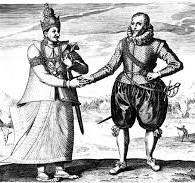
Sri Vikrama Rajasinghe

By placing the second sentence after the first hasn’t Shani made out the second assertion to be some kind proof of the first assertion? But signing the Convention in Tamil is not indicative of any lack of distinctiveness of ethnic identity no? it is actually more an elitist thing isn’t it? Tamil was made the current language of the ‘inner circle’ by the Royal family and their powerful contingent of Royal relations present at court no? It’s rather like the pre revolutionary Russian nobility speaking French isn’t it or the way people speak and write in English in Sri Lanka even when they are among their own with no need of a lingua franca?

I am entirely in agreement with Darshanie’s reasoning in her second paragraph. Let me add that as far as I know the signatures deemed Tamil in the Kandyan Convention are in fact written in Grantha which is a script not a language. I leave it to scholars versed in that field to engage that issue.”

Continue reading

Leave a comment

Filed under accountability, ancient civilisations, authoritarian regimes, British imperialism, centre-periphery relations, cultural transmission, Dutch colonialism, ethnicity, heritage, historical interpretation, Indian traditions, island economy, Kandyan kingdom, landscape wondrous, life stories, patriotism, politIcal discourse, power politics, Sinhala-Tamil Relations, sri lankan society, the imaginary and the real

Us/Them Semantics in Sinhalese Confrontations with Other Forces Over Time

Michael Roberts presenting the Synopsis of an Article published after a refereeing process in the journal NATIONALISM and ETHNIC POLITICS  Vol 9/3 Summer 2003, pp. 75-102

The collective identity of Sinhala-speakers over four centuries dating from the 1590s is analyzed with due attention to the structural form of (a) the Kingdom of Kandy and (b) the British colonial regime that took control of the whole island by 1815/18. The analysis dwells on the modes of oral, visual-iconic and written forms of cultural transmission that pre-dated print technology, while drawing attention to the relative uniformity of the Sinhala language in both geographical and temporal scale. A semantic pattern of political alliances based on the opposition of inside to outside which works contextually like a nestling Chinese-box is one dimension of this linguistic order. This supported the tendency of Sinhalese representations to adopt an associational logic which merged past enemies (the wicked Tamils) with contemporary enemies (the Portuguese, the English) during the liberation struggles of the Kandyan state and its militia in the pre-1818 period. Such tendencies and the continuation of disparaging epithets coined during the period of Portuguese imperial intrusion into the vocabulary of the twentieth century must inform any theoretical efforts to distinguish the collective consciousness of the Sinhalese after the substantial transformations initiated under the British from that which is expressed so powerfully in the war poems of the pre-British period. 
VISIT this Digital-Reference:
https://www.semanticscholar.org/paper/Language-and-national-identi ty%3A-the-Sinhalese-and-Roberts/003324e5fbcdd
Special ADDITIONS for TPS …. The “US vs THEM” Phenomenon

Leave a comment

Filed under authoritarian regimes, British colonialism, centre-periphery relations, communal relations, cultural transmission, demography, Dutch colonialism, economic processes, ethnicity, governance, hatan kavi, heritage, historical interpretation, Indian Ocean politics, island economy, Kandyan kingdom, language policies, law of armed conflict, life stories, literary achievements, nationalism, patriotism, politIcal discourse, population, Portuguese imperialism, power politics, racism, security, self-reflexivity, Sinhala-Tamil Relations, Sri Lankan scoiety, transport and communications, world events & processes, zealotry

A Shortage of Tamed Elephants constrains ESALA PERAHERA

Item in the Daily Mirror, 18 May 2024

A situation has arisen where getting the participation of elephants at both peraheras has become a problem due to the holding of the Ratnapura Maha Saman Devalaya Perahera and the Kandy Esala Perahera on the same day, Sri Dalada Maligawa Diyawadana Nilame Pradeep Nilanga Dela said.

He told the Daily Mirror that at least 60 elephants will be able to participate in the Kandy Esala Perahera this year. During previous Kandy Esala Perahera seasons, 75 elephants participated, he said.

Continue reading

1 Comment

Filed under accountability, art & allure bewitching, Buddhism, cultural transmission, elephant tales, heritage, historical interpretation, island economy, Kandyan kingdom, landscape wondrous, life stories, patriotism, performance, population, religiosity, sri lankan society, travelogue, world events & processes

Roman Szechowycz: A Discerning Eye for Past & Present in the Gal Oya’s History

This is a presentation of an article entitled “The “Rock River” Story” by Roman W. Szechowycz in the Loris Magazine, Vol. 8 No. 6  December, 1960. Page 348. Its presentation here has been made feasible by my Aloysian pal KK De Silva.  I have underlined aspects of this account with highlights.

Let me stress here that Roman Szechowycz’s searching eye and mind leaves me amazed. This essay links the landscape to its medieval and ancient history and dwells on the history of Sinhalese civilization in revealing manner. 

Continue reading

1 Comment

Filed under ancient civilisations, architects & architecture, art & allure bewitching, British colonialism, colonisation schemes, cultural transmission, economic processes, ethnicity, governance, heritage, historical interpretation, insurrections, island economy, Kandyan kingdom, land policies, landscape wondrous, life stories, nationalism, patriotism, politIcal discourse, sri lankan society, travelogue, unusual people, war reportage, world events & processes

The Roberts Mss at Adelaide University Library

Michael Roberts

Recent Email Exchanges with Jane Russell of UK, who has one foot in England and two feet in island Sri Lanka, and a revived focus on  George E De Silva (1870-1950) reminded me of the George E. Mss Memoirs in typescript which Jane had given me long ago. This led me to a long list which amounts to a treasure trove for those addressing a variety of topics in the history of Sri Lanka. I present the details before. Those wishing to pursue specifics must write to the Head of the Special Collections at the Barr Smith Library Adelaide University, not to me: samantha.farnsworth@adelaide.edu.au

It is my conjecture that the same corpus of material (or parts thereof) will also be part of the Roberts Collection at the National Library Services Board along Torrington Rd (beside the National Archives) in Colombo. They could initially seek specifics from Mr Welimuni Sunil who heads the institution: viz …

Welimuni Sunil … sunilnldsb@gmail.com

Continue reading

Leave a comment

Filed under accountability, British colonialism, Buddhism, caste issues, chauvinism, Colombo and Its Spaces, colonisation schemes, commoditification, communal relations, counter-insurgency, cultural transmission, demography, Dutch colonialism, economic processes, education, Empire loyalism, ethnicity, governance, heritage, historical interpretation, insurrections, irrigation, island economy, Kandyan kingdom, land policies, life stories, literary achievements, LTTE, modernity & modernization, Muslims in Lanka, nationalism, parliamentary elections, patriotism, photography, pilgrimages, plantations, political demonstrations, politIcal discourse, Portuguese in Indian Ocean, power politics, riots and pogroms, Royal College, Sinhala-Tamil Relations, social justice, Sri Lankan cricket, sri lankan society, suicide bombing, Tamil migration, terrorism, transport and communications, unusual people, war reportage, women in ethnic conflcits, working class conditions, world events & processes, World War II and Ceylon

Lecture on Buddhist Temple Paintings durng the Colonial Period

Prof. Chandanie Wanigatunge will be delivering a National Trust Lecture on Temple Paintings during Colonial Period” ….. at 6.00 pm, Thursday, 29th February 2024 ………. The Auditorium of the College of Surgeons of Sri Lanka, No. 6, Independence Avenue, Colombo 7….. accessible on You Tube: https://www.youtube.com/@ntsl9627

Degaldoruwa Temple


Continue reading

Leave a comment

Filed under architects & architecture, art & allure bewitching, Buddhism, cultural transmission, education, ethnicity, female empowerment, Hinduism, historical interpretation, Indian traditions, Kandyan kingdom, landscape wondrous, life stories, performance, religiosity, travelogue, world affairs