
Category Archives: island economy

India & Lanka and the Devolution of Land Powers: Critical Comments

Gerald H. Peiris, courtesy of The Island , where the title is “Devolution of Land Powers – A Comment” … Note that emphasis via highlighting is the work of The Editor, Thuppahi

Among the writings published in the wake of release of the Report submitted to Parliament by the Constitutional Reform Sub-Committee on ‘Centre-Periphery Relations’ are those that appeared in recent issues of The Island – C. A. Chandraprema’s ‘Analysis’ of the report, and a more general piece titled ‘Constitutional reform and devolution of power’ by Harim Peiris. The former, needless to say, is an incisive critique written at a level of expertise which the ‘Panel of Experts’ that served the sub-committee appears to have lacked. The latter, I respectfully submit, is a feeble attempt that contains misrepresentations, intended no doubt to reinforce the recommendations made by the sub-committee on ‘devolution’.
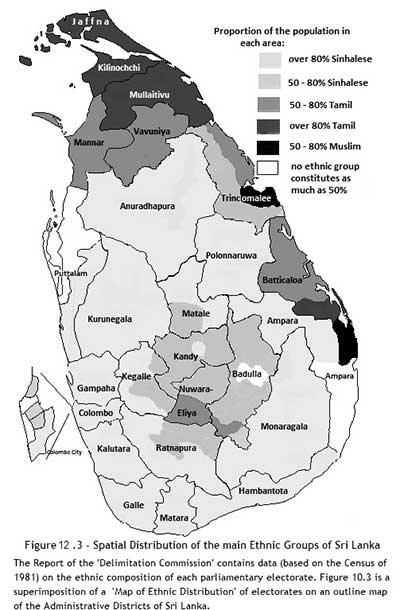
 

aagp-devolution Figure 2

This paper is being written with the twin objective of supplementing Chandraprema’s criticisms with a few sets of information relevant to a study of ‘Centre-Periphery Relations’ in a multi-ethnic polity such as ours, and to highlight with special reference to Harim Peiris’ article, the superficiality typical of the on-going campaign intended to emaciate the unitary character of the nation-state of Sri Lanka. This campaign is also represented by recent publications such as the reports produced by the ‘Public Representations Committee on Constitutional Reform’ (chaired by Lal Wijenayake) and the ‘Constitutional Reform Sub-Committee’ referred to above, alongside the sustained literary efforts by self-professed “Sri Lanka experts” in India ̶for example those associated with the ‘Centre for South and Southeast Asian Studies’ of the University of Madras̶ whose barely concealed objective all along has been that of promoting the hegemonic interests of India in the South Asia Region.
 

Continue reading

1 Comment

Filed under accountability, democratic measures, devolution, economic processes, electoral structures, ethnicity, historical interpretation, Indian Ocean politics, island economy, LTTE, modernity & modernization, politIcal discourse, power politics, power sharing, security, Sinhala-Tamil Relations, world affairs

Leonard Woolf, The Anti-Imperialist

Thiru Arumugam, Courtesy of The Ceylankan: Journal of the Ceylon Society of Australia, journal 76, Vol. XIX, 4 November 2016

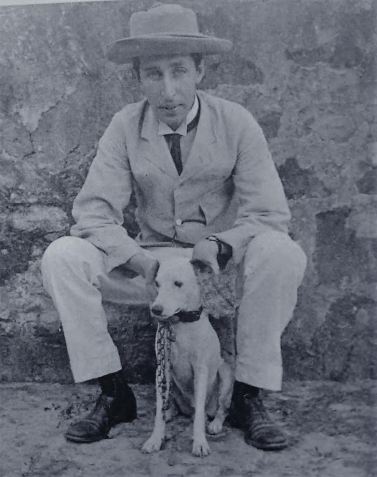
aawoolf-dogWoolf and his dog “Charles” in Jaffna

Introduction: The Ceylankan has carried three articles about Leonard Woolf. In the May 2004 issue Vama Vamadevan wrote an article titled Leonard Woolf  which mainly covered Woolf’s years in Ceylon (1904-1910). In the November 2004 issue Yasmine Gooneratne wrote an article titled Lone Woolf in which she presents a scholarly analysis of Woolf’s book Village in the Jungle and describes a forthcoming new edition of the book with misprints in the first (1913) edition corrected and excised passages restored. Yasmine’s article mentions Leonards “patient devotion with which he had nursed Virginia Woolf through her spells of mental illness, thereby guaranteeing to the world the emergence of its foremost female literary genius”.  Finally, in the February 2009 issue Philip Sansoni wrote an article titled Leonard Woolf – The Lonely Cadet and the Maiden in which he describes in great detail Woolf’s affair in Jaffna with Kitty Leyden. Woolf in the second volume of his autobiography1 says briefly that it was only a one-night stand where he lost his virginity, which had survived his days at Cambridge. However, in a letter to his good friend Lytton Strachey in England dated 12 November 1905written from Jaffna, Woolf said something more “… what do you think of my new one alone with a burgher concubine in a long whitewashed bungalow overlooking a lagoon, where time is only divided between reading Voltaire on the immense verandah and copulating in the vast and empty rooms …” Continue reading

2 Comments

Filed under British imperialism, caste issues, cultural transmission, governance, heritage, historical interpretation, island economy, landscape wondrous, life stories, literary achievements, modernity & modernization, politIcal discourse, self-reflexivity, sri lankan society, the imaginary and the real, unusual people, world events & processes

Understanding Extreme Sinhala Nationalism

aa-lionelLionel Bopage, in The Island, 10 April 2002, reviewing article entitled  Sinhala-ness and Sinhala Nationalism by Michael Roberts (see details below)

Current conflict in Sri Lanka is explicable by nothing less than an analysis of Sri Lanka’s entire history. But “all history becomes subjective; in other words, there is properly no history; only biography. Every mind must know the whole lesson for itself,” says Emerson. In his article “Sinhala-ness and Sinhala Nationalism” Dr. Michael Roberts presents a broad but concise ‘culturalogical’ perspective of the development of Sinhala consciousness between the 16th and 20th centuries. This helps us to better understand today’s events in Sri Lanka that are mostly justified in the name of history and culture.

There was a continuing force of oral story telling and poetry among Sinhala people until the mid-twentieth century. However, faced with the task of superimposing capitalism on a feudal (or Asiatic type) set-up, the British colonialists proceeded with building infrastructure needed for the capitalist economy, bringing the country under one administration and making English the language of administration. Against this background, Michael explains how various communities such as Burghers, Jas, Yons and Ceylon Tamils came to occupy niches in that socio-economic order.

ssinhala-ness Continue reading

Leave a comment

Filed under British colonialism, Indian Ocean politics, island economy, language policies, modernity & modernization, nationalism, politIcal discourse, power politics, racist thinking, self-reflexivity, Sinhala-Tamil Relations, sri lankan society, world events & processes, zealotry

Gems and Nuggets within the Commentary on SINHALA MINDSET: Reflections

Michael Roberts

A chance event led me to study the comments responding to “Sinhala Mind-Set,” one of the signature ‘tunes’ introducing my web-site thuppahi.wordpress.com – the other being WHY THUPPAHI. The present collection of responses has been cast in spasmodic fashion between 2009 and 2013. They are from Sri Lankans for the most part, with Mel Glickman, Jane Russell and one “Duque” being the only personnel outside this specific ‘embrace’ of nationality. Several facets of the information and thinking inscribed in these comments are pertinent to the situation facing Sri Lanka in the 2010s. I have therefore presented them again with significant segments highlighted to assist or stir readers, while proceeding to add reflections of my own in this companion piece. The aim is to promote provoke debate.

1364002696fea9-4 ssinhala-ness

Continue reading

1 Comment

Filed under British colonialism, communal relations, devolution, discrimination, economic processes, electoral structures, ethnicity, governance, historical interpretation, human rights, island economy, language policies, legal issues, life stories, LTTE, modernity & modernization, Muslims in Lanka, nationalism, politIcal discourse, power politics, racist thinking, Rajapaksa regime, reconciliation, rehabilitation, self-reflexivity, Sinhala-Tamil Relations, sri lankan society, Tamil civilians, tamil refugees, Tamil Tiger fighters, truth as casualty of war, world events & processes

President Sirisena in Q and A with The Hindu: … Resolving Tamil Issue Central Today

Daily News, 11 November 2016, where the title is ‘Solving the problems of Tamils is my obligation” ….. Emphasis via highlighting is the work of The Editor,Thuppahi

Emphasising his commitment to resolving Sri Lanka’s Tamil question, President Maithripala Sirisena has said he has an obligation to address the concerns of the island’s Tamils, most of whom had voted for him.  About 90 percent of the people in Sri Lanka’s Tamil-dominated north voted for him in the January 2015 elections, he said: “They have confidence in me that I will solve their problems. So it is not only my responsibility, but also my obligation to solve their problems,” he told The Hindu in an exclusive interview on Wednesday at the Presidential Secretariat in Colombo.

Amid growing concern over the apparently slow-paced reconciliation efforts, President Sirisena said: “Reconciliation is not something that can be done in a few days.” The government’s endeavour must be acceptable to the Sinhalese, Tamils, Muslims and other communities. “That is not an easy task,” he observed.

president-sirisena Continue reading

Leave a comment

Filed under accountability, communal relations, constitutional amendments, economic processes, historical interpretation, Indian Ocean politics, island economy, legal issues, life stories, politIcal discourse, power politics, Rajapaksa regime, reconciliation, rehabilitation, self-reflexivity, Sinhala-Tamil Relations, sri lankan society, Tamil civilians, tolerance, world events & processes

Where Vengeance kills its Best Practice Ventures: The Story of Avant Garde

C. A. Chandraprema, whose two-part essay in The Island, is entitled “The Avant Guard Affair: SL’s foray into the maritime security industry” … Emphasis via highlighting is the work of The Editor, Thuppahi.

Though much has been said and written in the past two years about the opaque operations of Avant Guard Maritime Services, most people know little or nothing of what it was all about – a classic case of a controversy creating more confusion than enlightenment. In this article, The Island staffer C. A. Chandraprema traces how Sri Lanka got drawn into the murky world of maritime security and the roles which the Rajapaksa government and the private sector played in the operation.  If the world of maritime security was murky, the murkiest part of it was the floating armouries. In the second part of this essay The Island staffer C. A. Chandraprema examines the controversy surrounding the Galle floating armoury of Avant Guard Maritime Services.  

avant-garde  avant-garde-22

In 2006 as the war intensified, the Defence Ministry set up Rakna Lanka Ltd, a fully government owned limited liability company to provide security services to important government installations and institutions such as the Mahaweli dams and the Petroleum Corporation etc. Made up entirely of ex-armed forces personnel this special security service was meant to eliminate the need to deploy army and police personnel to guard infrastructure and to release them for duties in the war zone. Rakna Lanka provided security services to 49 government institutions during and after the war. While Sri Lanka remained preoccupied with the war, a new development that took place in the Indian ocean region was the rise of piracy off the coast of Somalia. Continue reading

3 Comments

Filed under accountability, economic processes, governance, Indian Ocean politics, island economy, landscape wondrous, law of armed conflict, performance, power politics, Rajapaksa regime, security, self-reflexivity, sri lankan society, the imaginary and the real, transport and communications, UN reports, vengeance, world events & processes

Lanka’s Sovereignty as a Lilliput amidst Several Gullivers in the World Order

Rajiva Wijesinha,  in The Island, 9  November 2016, where the chosen title runsIgnoring the sovereignty of the Sri Lankan nation” … Highlights and colouring  have been added to aid the reader. Editor, Thuppahi

The contempt in leading elements of the current government for the interests of Sri Lanka as a sovereign nation had long puzzled and worried me. A clue to its possible origins emerged recently when I was looking at Michael Roberts’ collection of ‘Documents of the Ceylon National Congress and Nationalist Politics in Ceylon, 1929-1950’. Roberts has there, on p 2802 of Volume 4, an article by J R Jayewardene that recommends ‘An Indo-Lanka Federation’. He does say that ‘It is not possible here to define the status of Lanka in such a federation’, but he claims that amongst important conditions to be fulfilled are that ‘India and Lanka must be one unit for the purpose of defence’ and ‘In the Federal Legislature, Lanka must be accorded a status equivalent to the status of the Indian Provinces’.

jrj-cbo-tel young Jr Jayewardene rg-senanayake RG Senanayake

Continue reading

2 Comments

Filed under accountability, British colonialism, centre-periphery relations, China and Chinese influences, democratic measures, economic processes, education policy, governance, historical interpretation, Indian Ocean politics, island economy, legal issues, life stories, modernity & modernization, patriotism, politIcal discourse, power politics, Rajapaksa regime, security, Sinhala-Tamil Relations, sri lankan society, world events & processes

The Last Years of Mahinda Rajapaksa: Bouquets and Brickbats

Rajiva Wijesinha, in Ceylon Today October 2016, and his own web site 7 November 2016, where the title is Endgame: Meditations on a House, a Country, a Career – 18 Continuing Advocacy”

In retrospect it is clear that there was no hope of stopping Mahinda Rajapaksa rushing headlong into disaster, given that so many of those around him, while pursuing their own agendas, had lulled him into a false sense of security. But it still seemed necessary to try, and I did have at least one significant success. This was heartening, since it suggested he was not totally unaware of the problems being created for him. The problem had once again been caused by Basil Rajapaksa. While in the East for Reconciliation meetings, late in 2013, I was told about proposals that had been prepared at District and Divisional level for a large UN project which was funded by the European Union. This had been agreed with the government, after Basil had suggested various modifications including that it be extended to areas outside the North and East too. But then suddenly he had clamped down on it and said it could not proceed.

m-b-rajapaksa-cbo-tel

Continue reading

2 Comments

Filed under accountability, democratic measures, economic processes, foreign policy, historical interpretation, Indian Ocean politics, island economy, landscape wondrous, life stories, politIcal discourse, power politics, Rajapaksa regime, self-reflexivity, Sinhala-Tamil Relations, slanted reportage, sri lankan society, world affairs

The Long Littleness of Life by Leelananda De Silva

Izeth Hussain, reviewing Leelananda  de Silva’s Memoirs of Interesting Times, in The Island, November 6, 2016

 I refer of course to the ancient Chinese curse “May you live in interesting times” which has come to be much cited after Eric Hobsbawm chose “Interesting times” as the title of his autobiography. When life proceeds placidly in its even tenor the times are not particularly interesting, but they become so when changes take place, more particularly changes of a revolutionary order of the sort that we witnessed in Sri Lanka during the last century. Leelananda de Silva’s memoirs “The Long Littleness of Life” seems to be exceptional in reflecting those changes. This review will therefore touch on a few of the representative aspects of his book, to the extent possible within the limited ambit of a review.

Leave a comment

Filed under accountability, cultural transmission, discrimination, economic processes, education, governance, historical interpretation, island economy, life stories, modernity & modernization, performance, politIcal discourse, power politics, sri lankan society, world affairs

Homemade Culinary Art in Surviving the Eelam Wars

Vidya Balachander, 9 October 2016, whose chosen title is. Cookbook Tells The Story Of Sri Lanka’s Civil War Through Food.” ….…. http://www.npr.org/sections/thesalt/2016/10/09/496867198/cookbook-tells-the-story-of-sri-lanka-s-civil-war-through-food

Even if you knew nothing about Vijaya, her haunting portrait would likely give you pause. She peers out of the page, unsmiling, her silver hair pulled back and her eyes conveying an unspoken anguish. From the accompanying narrative, we learn that a few years ago, almost overnight, Vijaya became her granddaughter Anjali’s primary caretaker. Her daughter, Gayathri, set out to find nutritious food for the family amidst heavy shelling, at the violent end of Sri Lanka’s decades-long civil war, and never returned home. In the years since, money has been scarce and fresh vegetables in limited supply. But Vijaya and her granddaughter survived on creamy, coconut milk-laced sothis, mild gravies that act as soothing antidotes to the scorching cuisine of Sri Lanka’s Tamil-dominated north. Sothis are a common part of everyday meals. But seen through the lens of war — and Vijaya’s lingering loss — this simple side dish acquires a new depth.

aa-vijaya After losing her daughter during the war, Vijaya cares for her granddaughter Anjali. Despite not being able to afford freshvegetables, she cooks nourishing sothis or stews made of coconut milk.–Palmera

It is this exploration of food — both as a source of sustenance and a repository of memories in the context of war that makes Handmade, a cookbook published by Palmera, a not-for-profit organization based in Australia, different from the other Sri Lankan cookbooks to have come out in recent times. Continue reading

Leave a comment

Filed under cultural transmission, female empowerment, heritage, historical interpretation, island economy, landscape wondrous, life stories, LTTE, performance, politIcal discourse, power politics, rehabilitation, security, self-reflexivity, Sinhala-Tamil Relations, sri lankan society, Tamil civilians, the imaginary and the real, trauma, travelogue, unusual people, war reportage, welfare & philanthophy, women in ethnic conflcits, working class conditions, world affairs