Category Archives: human rights

Public or Private Health Care? The Dilemma Sri Lankans Face

Fazli Sameer, at Those Fuzzy Days where the title of the article runs thus: “Ethics of Health Care: Waiting, Paying and Weeping,” … with highlighting here imposed by The  Editor, Thuppahi

When my sister, Kumari, went for her annual cardiac check-up to the elite Makalanka hospital, we expected the usual strain, long hours of waiting, some tests, and maybe a bit of worry. What we didn’t expect was to be caught between two worlds: one where care came with a steep price and hidden payments, and another where care seemed trapped in endless waiting and fading patience.

Waiting. It’s the first and most universal experience patients face when seeking medical care in today’s clinics and hospitals. Whether public or private, the hours-long wait, without explanation or apology, has become the norm.

Continue reading

Leave a comment

Filed under accountability, Colombo and Its Spaces, disparagement, human rights, life stories, politIcal discourse, self-reflexivity, social justice, sri lankan society, taking the piss, trauma

Neelan Tiruchelvam: An Appreciation of His Mediatory Politics

Kagusthan Ariaratnam in Groundviews, 8 August 2025, where the title  reads “Neelan Unsilenced …” while highlights here have been added by The Editor, Thuppahi

Photo courtesy of Pitasanna Shanmugathas

NEELAN: UNSILENCED is a compelling and vital documentary that successfully situates the life of Dr. Neelan Tiruchelvam within the turbulent history of the Sri Lankan conflict. Its greatest achievement is providing a nuanced entry point into the war by focusing on the non-violent, intellectual and pluralistic dimensions of Tamil resistance – a perspective often eclipsed by the narrative of armed struggle. By foregrounding Neelan’s journey, the film illuminates a leader who dedicated his life to constitutional reform and reconciliation.

   Photo courtesy of Pitasanna Shanmugathas

Continue reading

1 Comment

Filed under accountability, anti-racism, centre-periphery relations, communal relations, democratic measures, economic processes, education, Eelam, electoral structures, ethnicity, governance, historical interpretation, human rights, Indian Ocean politics, landscape wondrous, language policies, Left politics, legal issues, life stories, modernity & modernization, nationalism, NGOs, patriotism, performance, politIcal discourse, power politics, power sharing, reconciliation, self-reflexivity, Sinhala-Tamil Relations, social justice, sri lankan society, unusual people

About Sharika Thiranagama ……. Today

Rohan Gunaratna  in  FACEBOOK, August 2025

Rohan Gunaratna

nopordtesS43ag881f170i0ihg99ic5ay0ic8luml74u9m2l8 61t4Mct4a0 ·

Congratulations to Sri Lankan-born American Anthropologist, Prof. Sharika Thiranagama, on winning the Davidson Prize at Cambridge University, where she was appointed a Scholar of St Johns.

Winner of Stanford University’s “Lifetime award for Academic achievement in Archaeology and Anthropology”, Sharika wrote “In My Mother’s House: Civil War in Sri Lanka” published by University of Pennsylvania Press in 2011.

Sharika

…Rajini Continue reading

2 Comments

Filed under accountability, atrocities, authoritarian regimes, communal relations, Eelam, ethnicity, governance, historical interpretation, human rights, life stories, literary achievements, performance, politIcal discourse, refugees, self-reflexivity, Sinhala-Tamil Relations, sri lankan society, Tamil migration, tamil refugees, teaching profession, trauma, unusual people, war crimes, world events & processes, zealotry

Is Prabakaran NOT a Hitler! …. Goodness Gracious Me!

Shenali D. Waduge, whose slashing sarcastic essay is entitledLet’s Celebrate Prabakaran & the LTTE’s Glorious Achievements!”  ... with the highlighting being that in  the original item

A tribute to the world’s most misunderstood mass murderer and his liberation-through-terror campaign.

They say greatness demands sacrifice—and Velupillai Prabakaran understood this better than most. He wasn’t content with speeches; he offered the world a blueprint: to build a homeland, first destroy the present; to claim justice, first silence every voice—especially your own people’s; to prove your worth, leave no witness behind. For over three decades, he led with unmatched precision: dismantling democracy, eliminating dissent, recruiting children, and bleeding civilians dry—all while demanding the world call it liberation. Some build nations through unity; he built his with bunkers, landmines, cyanide, and the bones of the innocent. And still, they light candles for him. They hold commemorations in universities. UN officials attend. Foreign parliamentarians give speeches. So, in the spirit of glorifying terror, let’s not just mourn Velupillai Prabakaran—let’s celebrate the man who redefined cruelty and called it Eelam, by honoring every child stolen, every right violated, and every drop of blood shed in his name.

Continue reading

1 Comment

Filed under accountability, atrocities, authoritarian regimes, centre-periphery relations, chauvinism, Eelam, ethnicity, female empowerment, governance, historical interpretation, human rights, Indian Ocean politics, insurrections, law of armed conflict, life stories, LTTE, martyrdom, military strategy, nationalism, patriotism, politIcal discourse, power politics, prabhakaran, self-reflexivity, Sinhala-Tamil Relations, slanted reportage, sri lankan society, suicide bombing, Tamil civilians, Tamil migration, tamil refugees, Tamil Tiger fighters, terrorism, the imaginary and the real, truth as casualty of war, unusual people, vengeance, war crimes, war reportage, world events & processes

Chemmani Graves: The Site Today

Map  and Photos supplied by a friend


Continue reading

Leave a comment

Filed under accountability, atrocities, counter-insurgency, Eelam, ethnicity, historical interpretation, human rights, insurrections, law of armed conflict, legal issues, life stories, photography, politIcal discourse, self-reflexivity, Sinhala-Tamil Relations, slanted reportage, sri lankan society, Tamil civilians, trauma, truth as casualty of war, vengeance, war reportage

Chemmani Graves Site & OCHCR Finds

N. Sathiya Moorthy, in CEYLON TODAY, 1 August 2025,  with this  title “Hundred Not Out” **

For the uninitiated readers of the national media, and possibly the majority Sinhala media, Chemmani may yet to happen. But after weeks of digging up unmarked graves in Northern Jaffna town, Government officials under Court supervision have already taken out over a hundred human skeletons, including those of infants and grown-up children. The numbers are growing with each passing day of digging, which is at times halted for logistics reasons, one should assume.

Yes, only scientific studies would show if they are of recent origin, but the fact that they have been recovered from dig-outs six to eight metres deep may indicate that they are not ancient. Yet, they are historic in their own way, adding heft to the Tamils’ charges that the Armed Forces ruthlessly killed their civilians during the three-decade-long ethnic war – and are yet to be held accountable.


Continue reading

Leave a comment

Filed under accountability, atrocities, centre-periphery relations, ethnicity, historical interpretation, human rights, law of armed conflict, legal issues, life stories, politIcal discourse, self-reflexivity, Sinhala-Tamil Relations, sri lankan society, Tamil civilians, the imaginary and the real, trauma, truth as casualty of war, war reportage

Deciphering Patriotic Devotion: The Japanese in the 1940s & the Lankan Tamil People For the LTTE

Michael Roberts reproducing an article presented in a popular website during the final stages in Eelam War IV in 2008/09 within the context TODAY of a horrendous war-situation in Palestine and its environs — the website being GROUNDVIEWS: …………….. https://groundviews.org/2009/04/21/ltte-and-tamil-people-i-preamble/ ….. This article was just the first essay in a four-part enterprise.**

LTTE and Tamil people, I: preamble,” http://www.groundviews.org, 21 April 2009.

This set of essays on “LTTE and Tamil People” submitted to Groundviews is a sequel to the four articles on “Suicidal Political Action” reproduced in http://www.transcurrents.com from 2 April onwards. Both sets of essays are interconnected and involve a measure of repetition because they are set out as separate articles. All of them are a product of a comparative survey that I embarked on about five years ago: namely, reviewing the cultural ingredients which have motivated the projects of the jihadists (holy warriors) and mujahideen (fighters for cause) on the one hand and, on the other, the

Continue reading

Leave a comment

Filed under accountability, atrocities, centre-periphery relations, Eelam, ethnicity, governance, heritage, human rights, island economy, landscape wondrous, legal issues, life stories, LTTE, martyrdom, military strategy, nationalism, Pacific Ocean issues, patriotism, political demonstrations, politIcal discourse, power politics, psychological urges, self-reflexivity, Sinhala-Tamil Relations, sri lankan society, Tamil civilians, tamil refugees, Tamil Tiger fighters, trauma, unusual people

For Lankan Researchers: An Oral History Workshop


Image description

Image description

This interactive workshop, led by experienced oral historian Gaya Fernando, will introduce participants to the principles, practices, and power of oral history. Tailored for researchers, journalists, documentary producers, and writers, it will explore how personal narratives and community voices can enrich social and political research.


The formal session concludes at 12:30 PM, but participants who are interested are welcome to stay on for an informal discussion with Gaya until 3:30 PM.

15th August 2025


9.30 AM onwards


Leave a comment

Filed under caste issues, centre-periphery relations, communal relations, constitutional amendments, cultural transmission, democratic measures, demography, doctoring evidence, economic processes, education, ethnicity, female empowerment, foreign policy, fundamentalism, gender norms, governance, historical interpretation, human rights, Indian Ocean politics, land policies, language policies, law of armed conflict, Left politics, lettering--history, life stories, literary achievements, modernity & modernization, nationalism, politIcal discourse, power politics, religiosity, self-reflexivity, sri lankan society

Political Complexities in Jaffna & the Killing of Rajani Thiranagama

BEING Chapter 3 of Palmyra Fallen, from Rajani to War’s End, by Rajan Hoole ….. Published 2015 …. a book printed and bound by Global Printing Works, 5 Stork Place, Colombo 10 …. a chapter entitled Some Crucial Pieces of the Jigsaw” … [with the highlights here –– except for those in black — being impositions by The Editor, Thuppahi]

 “To everything there is a season…A time to be born and a time to die…A time to weep and a time to laugh: a time to mourn and a time to dance…I know that whatsoever God doeth it shall be forever: nothing can be put to it, nor anything taken from it”- The Book of Ecclesiastes

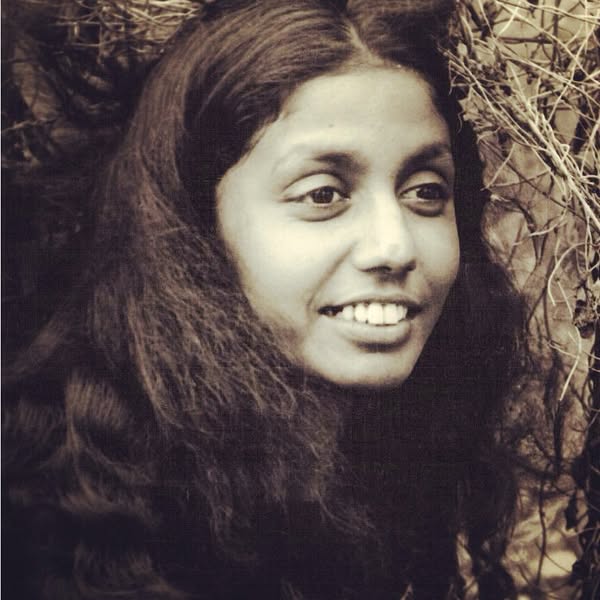
Dayapala & Rajani Thiranagama in 1984 .. . well before her assassination in late 1989

Dayapala in later years


3.1 The Sands Run Out

More recently, we have been able to put together more detailed information about Rajani’s killing. Given that much water has since flowed under the bridge, we felt that while placing the truth about her murder on a record that adequately traces its manner, purpose and the parties involved, it would also be appropriate to bring out a publication that allows today’s reader to see her relevance to the present. As is evident from our account, Rajani’s killing was well planned, mobilising a network of LTTE contacts and agents. Here in Chapter 3, we detail the cold-blooded murder and cover-up by the LTTE and the names of those who were involved at the time. In Chapter 4, we discuss who within the LTTE was involved.

Continue reading

2 Comments

Filed under accountability, asylum-seekers, atrocities, authoritarian regimes, caste issues, centre-periphery relations, citizen journalism, communal relations, disparagement, education, Eelam, ethnicity, governance, historical interpretation, human rights, insurrections, language policies, life stories, LTTE, nationalism, patriotism, political demonstrations, politIcal discourse, power politics, prabhakaran, racism, security, self-reflexivity, Sinhala-Tamil Relations, social justice, sri lankan society, Tamil civilians, Tamil migration, tamil refugees, Tamil Tiger fighters, teaching profession, terrorism, trauma, world events & processes, zealotry

THE GUARDIAN in UK seeks reader-support

“From Minute Hands can an Ongoig  ‘Edifice’ be built”– Thupphiyaaa

AN APPEAL ON EMAIL from THE GUARDIAN


Continue reading

2 Comments

Filed under art & allure bewitching, Britain's politics, centre-periphery relations, charitable outreach, citizen journalism, democratic measures, economic processes, governance, heritage, human rights, landscape wondrous, Left politics, life stories, performance, politIcal discourse, press freedom & censorship, self-reflexivity, tolerance, travelogue, truth as casualty of war, world events & processes