Category Archives: ethnicity

Hahndorf in the Adelaide Hills: German Settlers From 1839 On ….

Keith Conlon in a Genealogical Society of Queensland – GSQ’s post =deospnoStrg8 r42uti9lf3m8pgff0il26tl5f1tag2f57flti74h033aA5t · … entitled  “From Prussa to Hahndorf in South Australia. Thanks to Keith Conlon”

The end of an epic pioneer voyage:  it began in Silesia, Prussia, for the ‘Old Lutheran’ religious refugees who founded Hahndorf in South Australia in August 1839.

John Ford waterccolour    


Monument Australia Continue reading

Leave a comment

Filed under architects & architecture, Australian culture, centre-periphery relations, colonisation schemes, cultural transmission, economic processes, ethnicity, European history, heritage, historical interpretation, landscape wondrous, life stories, migrant experiences, outmigration, refugees, religiosity, transport and communications, travelogue, world events & processes

Israel’s NAZI Terror in Palestine … with US & European Backing

Bishop Duleep de Chickera in Colombo, in an  article  in  GROUNDVIEWS, 31 July  2025, entitled “From Toe Hold to Freehold: Zionist Occupation Strategies”

GV NOTE  INTRODUCING THE AUTHOR : In 2001 Duleep De Chickera was ordained the 14th Anglican Bishop of Colombo. Educated at Royal College, Colombo and representing the college at 1st XV Rugby, he gained his training for the ministry at the Theological College of Lanka in Pilimathalawa, earning a B.Th thereafter earning a M.Sc. from Keble College, Oxford.  He has served as chaplain and then as the sub-warden of S. Thomas’ College, Mt Lavinia. And in 2008 was accorded the honour of preaching a key sermon at the Lambeth Conference in the presence of 650 Bishops from around the world.

When US President Donald Trump arrogantly suggested that the neighbouring Arab States should absorb the Gaza population as a solution to Israel’s decimation of Gaza, he announced what discerning persons the world over had already perceived – the earliest Zionist Israeli arrivals, courtesy Lord Balfour, had come to take it all.

Continue reading

1 Comment

Filed under accountability, american imperialism, arab regimes, atrocities, authoritarian regimes, centre-periphery relations, discrimination, disparagement, ethnicity, Fascism, historical interpretation, Jews in Asia, legal issues, life stories, Middle Eastern Politics, military strategy, Palestine, politIcal discourse, power politics, racism, trauma, truth as casualty of war, war crimes, war reportage, world events & processes, zealotry

Neelan Tiruchelvam: An Appreciation of His Mediatory Politics

Kagusthan Ariaratnam in Groundviews, 8 August 2025, where the title  reads “Neelan Unsilenced …” while highlights here have been added by The Editor, Thuppahi

Photo courtesy of Pitasanna Shanmugathas

NEELAN: UNSILENCED is a compelling and vital documentary that successfully situates the life of Dr. Neelan Tiruchelvam within the turbulent history of the Sri Lankan conflict. Its greatest achievement is providing a nuanced entry point into the war by focusing on the non-violent, intellectual and pluralistic dimensions of Tamil resistance – a perspective often eclipsed by the narrative of armed struggle. By foregrounding Neelan’s journey, the film illuminates a leader who dedicated his life to constitutional reform and reconciliation.

   Photo courtesy of Pitasanna Shanmugathas

Continue reading

1 Comment

Filed under accountability, anti-racism, centre-periphery relations, communal relations, democratic measures, economic processes, education, Eelam, electoral structures, ethnicity, governance, historical interpretation, human rights, Indian Ocean politics, landscape wondrous, language policies, Left politics, legal issues, life stories, modernity & modernization, nationalism, NGOs, patriotism, performance, politIcal discourse, power politics, power sharing, reconciliation, self-reflexivity, Sinhala-Tamil Relations, social justice, sri lankan society, unusual people

About Sharika Thiranagama ……. Today

Rohan Gunaratna  in  FACEBOOK, August 2025

Rohan Gunaratna

nopordtesS43ag881f170i0ihg99ic5ay0ic8luml74u9m2l8 61t4Mct4a0 ·

Congratulations to Sri Lankan-born American Anthropologist, Prof. Sharika Thiranagama, on winning the Davidson Prize at Cambridge University, where she was appointed a Scholar of St Johns.

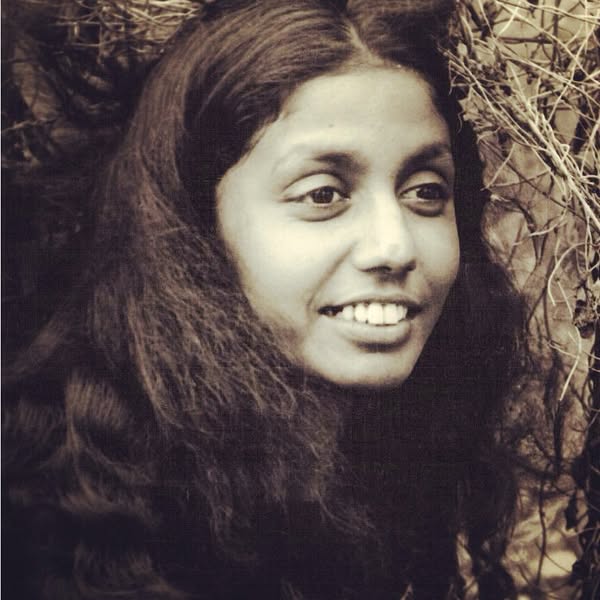
Winner of Stanford University’s “Lifetime award for Academic achievement in Archaeology and Anthropology”, Sharika wrote “In My Mother’s House: Civil War in Sri Lanka” published by University of Pennsylvania Press in 2011.

Sharika

…Rajini Continue reading

3 Comments

Filed under accountability, atrocities, authoritarian regimes, communal relations, Eelam, ethnicity, governance, historical interpretation, human rights, life stories, literary achievements, performance, politIcal discourse, refugees, self-reflexivity, Sinhala-Tamil Relations, sri lankan society, Tamil migration, tamil refugees, teaching profession, trauma, unusual people, war crimes, world events & processes, zealotry

In Memoriam: Vijaya Kumaratunga

DBS Jeyaraj in 2022 at https://dbsjeyaraj.com/dbsj/?p=67620 where the title reads “Vijaya Kumaratunga: Charismatic Actor-Politician May Have Changed Nation’s Destiny” …… Posted by Administrator on 21 February 2022, 1:11 am

The political landscape of Sri Lanka seems gloomy and desolate. Most of the actors who strut about the political stage posing as visionaries and leaders are in actuality empty vessels devoid of substance. Proverbial wisdom tells us that empty vessels make most sound. This is most apparent in the cacophony of voices currently prevalent in the polity. In the words of William Butler Yeats “ The best lack all conviction, while the worst Are full of passionate intensity.” The positive dream of Sri Lanka evolving into an inclusive, plural nation is slowly turning into a numerical majoritarian hegemonic nightmare.

 Vijaya Kumaratunga in Jaffna

Continue reading

1 Comment

Filed under accountability, anti-racism, art & allure bewitching, atrocities, authoritarian regimes, centre-periphery relations, chauvinism, communal relations, Eelam, ethnicity, historical interpretation, insurrections, JVP, language policies, Left politics, life stories, nationalism, patriotism, performance, political demonstrations, politIcal discourse, self-reflexivity, Sinhala-Tamil Relations, sri lankan society, unusual people, vengeance, zealotry

Is Prabakaran NOT a Hitler! …. Goodness Gracious Me!

Shenali D. Waduge, whose slashing sarcastic essay is entitledLet’s Celebrate Prabakaran & the LTTE’s Glorious Achievements!”  ... with the highlighting being that in  the original item

A tribute to the world’s most misunderstood mass murderer and his liberation-through-terror campaign.

They say greatness demands sacrifice—and Velupillai Prabakaran understood this better than most. He wasn’t content with speeches; he offered the world a blueprint: to build a homeland, first destroy the present; to claim justice, first silence every voice—especially your own people’s; to prove your worth, leave no witness behind. For over three decades, he led with unmatched precision: dismantling democracy, eliminating dissent, recruiting children, and bleeding civilians dry—all while demanding the world call it liberation. Some build nations through unity; he built his with bunkers, landmines, cyanide, and the bones of the innocent. And still, they light candles for him. They hold commemorations in universities. UN officials attend. Foreign parliamentarians give speeches. So, in the spirit of glorifying terror, let’s not just mourn Velupillai Prabakaran—let’s celebrate the man who redefined cruelty and called it Eelam, by honoring every child stolen, every right violated, and every drop of blood shed in his name.

Continue reading

1 Comment

Filed under accountability, atrocities, authoritarian regimes, centre-periphery relations, chauvinism, Eelam, ethnicity, female empowerment, governance, historical interpretation, human rights, Indian Ocean politics, insurrections, law of armed conflict, life stories, LTTE, martyrdom, military strategy, nationalism, patriotism, politIcal discourse, power politics, prabhakaran, self-reflexivity, Sinhala-Tamil Relations, slanted reportage, sri lankan society, suicide bombing, Tamil civilians, Tamil migration, tamil refugees, Tamil Tiger fighters, terrorism, the imaginary and the real, truth as casualty of war, unusual people, vengeance, war crimes, war reportage, world events & processes

A Tennis Love Match Beyond Imagination

A Web Item sent by one Ramsay and one Eric

They met on the courts, forged in fire and fame. Andre Agassi and Steffi Graf were more than tennis royalty — they were survivors of pressure-packed childhoods, two athletes who’d once been treated more like machines than children. So when they became parents, something shifted. Not just in their lives, but in their hearts. There was a quiet vow between them — a promise not to repeat the past, not to push, not to mold. They wouldn’t raise champions. They’d raise *children.*

Continue reading

1 Comment

Filed under accountability, art & allure bewitching, cultural transmission, education, ethnicity, heritage, historical interpretation, landscape wondrous, life stories, performance, self-reflexivity, tolerance, unusual people

Reflections on the Test Scenario from A Lankan Cricket Aficianados

Errol Fernando’s Email Note to Lorenz  Pereira

Dear Lorenz,
As someone who claims to always support the underdog I was delighted that India won the final Test by 6 runs and made it 2 – 2. Perfect result.  India was playing against a team that has the best ‘first five’ batsmen in the world –  Duckett, Crawley, Pope, Root and Brook.  No one better.  By contrast Australia probably has the WORST first five  –  Khawaja, Konstas and three other jokers. However , the Aussies have the best quartet of bowlers in the world   –   Starc, Hazlewood, Cummins and Lyon with Boland in the wings. No one better.
The 5 India-England Tests were totally riveting, and I couldn’t take my eyes off. High quality stuff.  Captain Gill made 754 glorious runs for the series and Rahul and Pant were also glorious. England’s top 5 were good too.

Continue reading

3 Comments

Filed under cricket for amity, cricket selections, cultural transmission, ethnicity, life stories, performance, taking the piss, trauma

Chemmani Graves: The Site Today

Map  and Photos supplied by a friend


Continue reading

Leave a comment

Filed under accountability, atrocities, counter-insurgency, Eelam, ethnicity, historical interpretation, human rights, insurrections, law of armed conflict, legal issues, life stories, photography, politIcal discourse, self-reflexivity, Sinhala-Tamil Relations, slanted reportage, sri lankan society, Tamil civilians, trauma, truth as casualty of war, vengeance, war reportage

Global Economics & Sri Lanka over the Recent Centuries

Sunil Bastian: “Sri Lankan state in a changing global context”  … a 2025 article presented  here with highlights  imposed by The Editor,  Thuppahi.**

This short article emphasises the need to analyse the Sri Lankan state by placing it in the global context. This means not confining our minds within the borders of the Sri Lankan state. To emphasise this point I would like to point out that the formation of the Sri Lankan state itself was a product of a global phenomenon – British colonialism (see Bastian Sunil (2025) State formation and Conflicts in Sri Lanka. London: Bloomsbury Academic for an analysis of Sri Lankan state formation).

Under British colonialism the entire geographic space of the island was covered by a single unit of territorial power. To administer the territory, the island was divided into spatial units using the directions of a compass. In this way cartography became an instrument of British colonialism. Other techniques of state formation were establishing an administrative structure, a judicial system, a system to collect taxes, regular census and the coercive power of the state to cover the entire island.

Continue reading

1 Comment

Filed under Americna imperialism, authoritarian regimes, British imperialism, centre-periphery relations, China and Chinese influences, commoditification, economic processes, ethnicity, foreign policy, governance, historical interpretation, Indian Ocean politics, land policies, life stories, modernity & modernization, nationalism, politIcal discourse, power politics, security, sri lankan society, transport and communications, world events & processes