Category Archives: caste issues

Caste in Sinhala Society

Continue reading →

1 Comment

Filed under British colonialism, caste issues, communal relations, cultural transmission, economic processes, gender norms, heritage, historical interpretation, life stories, politIcal discourse, sri lankan society, the imaginary and the real, working class conditions

Bloody Memories: The JVP Insurrection 1971

Zahrah Imtiaz,  courtesy of Daily News, 5 April 2017, where the title reads “Sanguinary Memories: JVP Insurgence of 1971”

“The decision taken by the nine senior members of the JVP when they met at the Sangaramaya Temple of the Vidyodaya University on April 2, 1971, was to capture State power by attacking all the police stations in the country on the night of April 5, 1971.”– “Rohan Gunaratna: Sri Lanka: A Lost Revolution? The Inside story of the JVP”

 From Prasad Premarathne… https://www.youtube.com/watch?v=lKN82MSCutg

The plan was simple, the orders had come and all they had to do was to execute it. Rohana Wijeweera, the charismatic leader of the JVP was in prison in Jaffna, and via a message sent through Lal Somasiri, he had asked that, “Posters should be published and leaflets distributed calling for his release, and in the case of an attack, 500 comrades should be sent to Jaffna to secure his release.” He had also stated, “If you cannot obtain my release legally, you may create an island-wide struggle throughout the country and then send 500 men”. Continue reading →

5 Comments

Filed under atrocities, caste issues, economic processes, governance, historical interpretation, Indian Ocean politics, island economy, JVP, law of armed conflict, life stories, patriotism, politIcal discourse, power politics, self-reflexivity, social justice, sri lankan society, the imaginary and the real

Sri Lanka’s Ethnic Achchaaru … or Racial Pickle

Michael Roberts

 Re-discovering this chat with Alex Van Arkadie today [2017] I think it is pertinent for all Sri Lankans …. And should be read in conjunction with my recent selection of material n “Sinhala Mind-Set” and “Why Thuppahi” ……. included in efforts to widen the exchanges in the following posts

…… Capped thereafter with a reading of Pon Kulendiren’s lovely tale of “Sinhala Nona”

https://thuppahis.com/2017/03/21/where-music-transcends-ethnic-divisions-sinhala-nona/#more-24614…… perhaps with background baila music such as Dingiri Dingare Le Menachchi!


Continue reading →

1 Comment

Filed under British colonialism, caste issues, cultural transmission, discrimination, disparagement, ethnicity, governance, heritage, life stories, politIcal discourse, racist thinking, self-reflexivity, Sinhala-Tamil Relations, sri lankan society, the imaginary and the real, tolerance, world events & processes, zealotry

Where Music transcends Ethnic Divisions: Sinhala Nona

Pon Kulendiren, courtesy of The Tamil Mirror where the title is “True Story of coincidence: Sinhala nona”

Kaffrinha –Pic from The Localist

It was snowing heavily. A few days were left for Christmas. I was enjoying a sip of Scotch on the rocks and watching Discovery channel on T.V. My wife walked into the sitting room after preparing the dinner for the family. She looked at the clock that showed 5.30 in the evening. With a grimace she turned towards me. It showed that she did not like me having a second drink. Black label bottle was a quarter empty. She quietly took the bottle and disappeared into her room. I ignored her action as I was reluctant to start a fight as she may have a long face while serving dinner. She returned after a few minutes. Continue reading →

17 Comments

Filed under caste issues, communal relations, cultural transmission, economic processes, ethnicity, gender norms, heritage, landscape wondrous, life stories, meditations, performance, politIcal discourse, self-reflexivity, sri lankan society, Tamil migration, the imaginary and the real, world affairs

Professional Mourners in Ceylon and Southern India

Michael Roberts

 My interest in the topic of disappearances in Sri Lanka over the past decade and the allegations presented by one “Floyyd” in his comments on my central frontispiece named ”Sinhala Mind-Set” on the 25th November 2013 led me to supplement my posts and inquiries on that topic with a serious question I sent to several friends and personnel on  the 9th December 2016 and the week that followed.  Only a few responded to my inquiry in the course of that month. It is of some significance that most of those whose information is presented below are of the older generation and, like me, in the age-bracket seventies. For that reason they are calling upon their younger days in supplying ethnographic information that is of considerable value. For this reason I refer to “Ceylon” in my title because the data seems to refer to practices before the name change in 1972. However, this does not mean that the practitioners of mourning and the capacities for lamentation on cue have been totally buried.

oppari-22  Women in oppari lamentation in southern India — cf Balachandran’s note below oppariFrom https://www.flickr.com/photos/wellbredkannanclicks/14228110375

Continue reading →

14 Comments

Filed under accountability, art & allure bewitching, caste issues, communal relations, cultural transmission, female empowerment, heritage, historical interpretation, immigration, landscape wondrous, life stories, meditations, performance, politIcal discourse, power politics, religiosity, self-reflexivity, Sinhala-Tamil Relations, sri lankan society, Tamil migration, the imaginary and the real, unusual people, vengeance, zealotry

Caste, Democracy and Social Justice: ICES Conference in Late November 2016

atudor Tudor  a-obey Gananath

Tudor Kalinga Silva

This conference was held at the International Centre for Ethnic Studies, Colombo on the 19/20th November 2016 with the participation of over 60 researchers from Sri Lanka and abroad. The objective of the conference was to review recent research on caste in Sri Lanka from the angle of democracy and social justice in line with the broader ICES interest in identity politics in Sri Lanka. The specific issues discussed included possible theoretical, conceptual and methodological issues relating to understanding caste and caste-like phenomenon in Sri Lanka, caste dynamics in Sinhala society, caste in historical context, caste issues in Northeast Sri Lanka, post-war transformation of caste, migration, caste and ethnicity, caste and religion and policy framework for addressing horizontal inequality and promoting social justice. The keynote speakers in the conference were Prof. Gananath Obeyesekere, Dr. Kumari Jayawardena, Dr. John Rogers (from the American Institute of Sri Lanka Studies) and Prof. K. Tudor Silva who also convened the conference on behalf of ICES. Continue reading →

1 Comment

Filed under caste issues, cultural transmission, economic processes, governance, heritage, historical interpretation, island economy, landscape wondrous, Left politics, legal issues, life stories, modernity & modernization, politIcal discourse, self-reflexivity, social justice, sri lankan society, Tamil civilians, unusual people, welfare & philanthophy

Leonard Woolf, The Anti-Imperialist

Thiru Arumugam, Courtesy of The Ceylankan: Journal of the Ceylon Society of Australia, journal 76, Vol. XIX, 4 November 2016

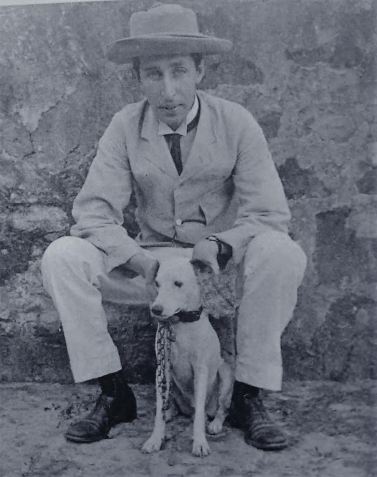
aawoolf-dogWoolf and his dog “Charles” in Jaffna

Introduction: The Ceylankan has carried three articles about Leonard Woolf. In the May 2004 issue Vama Vamadevan wrote an article titled Leonard Woolf  which mainly covered Woolf’s years in Ceylon (1904-1910). In the November 2004 issue Yasmine Gooneratne wrote an article titled Lone Woolf in which she presents a scholarly analysis of Woolf’s book Village in the Jungle and describes a forthcoming new edition of the book with misprints in the first (1913) edition corrected and excised passages restored. Yasmine’s article mentions Leonards “patient devotion with which he had nursed Virginia Woolf through her spells of mental illness, thereby guaranteeing to the world the emergence of its foremost female literary genius”.  Finally, in the February 2009 issue Philip Sansoni wrote an article titled Leonard Woolf – The Lonely Cadet and the Maiden in which he describes in great detail Woolf’s affair in Jaffna with Kitty Leyden. Woolf in the second volume of his autobiography1 says briefly that it was only a one-night stand where he lost his virginity, which had survived his days at Cambridge. However, in a letter to his good friend Lytton Strachey in England dated 12 November 19052  written from Jaffna, Woolf said something more “… what do you think of my new one alone with a burgher concubine in a long whitewashed bungalow overlooking a lagoon, where time is only divided between reading Voltaire on the immense verandah and copulating in the vast and empty rooms …” Continue reading →

2 Comments

Filed under British imperialism, caste issues, cultural transmission, governance, heritage, historical interpretation, island economy, landscape wondrous, life stories, literary achievements, modernity & modernization, politIcal discourse, self-reflexivity, sri lankan society, the imaginary and the real, unusual people, world events & processes

Discontent and Confrontational Violence in Sri Lanka, 1948-2009

Gerald Peiris, being Chapter 7 from his book Political Conflict in South Asia (2013, University of Peradeniya)  — a chapter based on his previous writings  [1]

 The survival of the principle of representative government based upon universal adult franchise since its introduction to the constitution more than eighty years ago while ‘Ceylon’ was still a colony of the British Empire is a feature often accorded prominence in scholarly discourses on the political history of Sri Lanka. Over the first three decades after independence (1948) the regularity of peaceful transfers of power from one regime to another, based upon the will of the people as expressed at national elections, was also widely acclaimed as a feature that made Sri Lanka unique among the emergent nation-states of the post-colonial era. The radiance of that achievement has, of course, dimmed considerably in the more recent past, due mainly to the violation of democratic norms in affairs of governance, and the intense rivalry that features the sub-national disputes which often find expression in confrontational violence.

1958-riots-22  Scenes in Colombo from 1958 riots after OEG led crackdown1958-getty

Continue reading →

6 Comments

Filed under accountability, american imperialism, British colonialism, caste issues, communal relations, devolution, governance, historical interpretation, Indian Ocean politics, island economy, JVP, landscape wondrous, Left politics, legal issues, life stories, LTTE, military strategy, Muslims in Lanka, nationalism, politIcal discourse, population, power politics, prabhakaran, Presidential elections, Rajapaksa regime, security, self-reflexivity, Sinhala-Tamil Relations, sri lankan society, Tamil civilians, Tamil Tiger fighters, terrorism, truth as casualty of war, unusual people, vengeance, war reportage, welfare & philanthophy, working class conditions, world events & processes

Reflections of a Maverick Tamil Intellectual about Politics amidst OEG, DS, Banda and Others

From the Daily News, 12 July 2016

suntharalingamOn the land like unto ocean, I assume the form of a wave, And trusted dreams as a lifeI was trapped in the whirlwind of three desires, Ensnared day after day For the mound of my body I searched for food Without rest night or day I eat, eat and sleep seeing nought else, I get no gain On the shore of sorrow, I erect a tent of five virtues, I regarded thou as my mother, my son Yet thee treat me in this fashion Without interceding on my behalf Standing in-between and questioning meIs it good to remain so? Oh! My Lord! The Lover of Sivakami!! Thou who created me, oh! Natarajah of Thillai!

This poem from the Natarajapathu was translated by Suntharalingam on January 14, 1978 (Thaipongal Day) and annotated in his mother’s copy of the Kandapuranam from 1930.

What does a grandfather’s letter mean to you? Boring… pedagogical… jam-packed with advices? For C Anjalendran, his grandfather’s letters reveal a bygone grand era of Ceylon. His grandfather was a strange combination of being a professor of mathematics, lawyer and – most interestingly – a politician walking shoulder to shoulder with D S Senanayake, S W R D Bandaranaike, J R Jayewardene, Sir John Kotelawala and Sir Oliver Goonetilleke.

Continue reading →

1 Comment

Filed under caste issues, citizen journalism, devolution, Eelam, ethnicity, governance, historical interpretation, Indian religions, life stories, politIcal discourse, power politics, religiosity, Sinhala-Tamil Relations, sri lankan society, the imaginary and the real, unusual people

Failures in the Southern Political Leadership and Missed Opportunities in Jaffna,1963-1966

Neville Jayaweera, presenting here Extracts from Chapters 9 and 10 and Epilogue 1 of his book “Exorcising the past and holding the vision – an autobiographical reflection on the ethnic conflict”, covering the period when Jayaweera was the Government Agent of Jaffna in 1963-66 and the aftermath.... with the highlighted emphasis within the text being choices inserted by the author himself.

                  From chapter 9:  Nationhood and Leadership

 In the last week of December 1964, a cyclone of unprecedented ferocity devastated the Northern Province. The fishing villages of Myliddy, Kankesanthurai, Point Pedro, Nargakovil and several areas within the Jaffna District were reduced to a wilderness of sand dunes, stagnant salt water and windswept debris. In the Myliddy fishing village alone, several hundred lost their lives at sea. The Collector of Ramnad District in SE Tamil Nadu (India) contacted me to say that over 200 bodies had been washed ashore there and he had no alternative but to order mass cremations on the seashore to halt the spread of disease. Throughout the Jaffna District the Kalavoham crop (the main paddy crop) was wiped out and hundreds of fishing boats were reduced to matchwood. The distress was appalling.

Neville-Jayaweera

Continue reading →

Leave a comment

Filed under accountability, atrocities, authoritarian regimes, caste issues, centre-periphery relations, communal relations, cultural transmission, democratic measures, devolution, discrimination, Eelam, governance, heritage, historical interpretation, language policies, life stories, LTTE, plural society, politIcal discourse, self-reflexivity, Sinhala-Tamil Relations, sri lankan society, world affairs