Category Archives: anti-racism

Nationalist Studies and the Ceylon Studies Seminar at Peradeniya, 1968-1970s

Michael Roberts …. repeating an old TPS item [with highlighting added] because of the implications of the recent TPS item  by Bedgar Perera re Prof Rex Clements.

The years 1966 to 1975 were heady days in Ceylon. Especially so for some of us in Peradeniya Univeristy where the CEYLON STUDIES SEMINAR was launched in November 1968 by a few members of the Arts Faculty assisted by the facilities provided by Professor Gananath Obeyesekera at the Sociology Departmentlocated then on Lower Hantane Road away from the centre of teaching. Not least among these facilities was the service provided by the Sociology Department peon Sathiah[1] who cyclostyled the written seminar papers beforehand for circulation so that those who were keen could read any presentation beforehand if they so wished – a procedure that also maximized discussion time. This background service was seconded by the typing services of Mrs Hettiarachchi in the History Department and Mr Kumaraswamy in the Sociology Department.

   Sathiah — an essential servicing hand …

  & Bishop Lakshman Wickremasinghe, who perceived the depth of the festering ethnic split early on

Continue reading

2 Comments

Filed under accountability, anti-racism, centre-periphery relations, communal relations, cultural transmission, democratic measures, demography, disparagement, economic processes, education policy, Eelam, electoral structures, ethnicity, governance, historical interpretation, island economy, land policies, Left politics, life stories, nationalism, politIcal discourse, power politics, power sharing, racist thinking, self-reflexivity, Sinhala-Tamil Relations, sri lankan society, world events & processes

Kumar Sangakkara’s Ecumenical Patriotic Outreach

Michael Roberts

Kumar Sangakkara’s recent step as a front-personage for tourism in Sri Lanka (see https://thuppahis.com/2024/09/29/kumar-sangakkara-for-tourist-trips-to-sri-lanka/) calls to mind his bold steps on behalf of ethnic compromise and reconciliation in Sri Lanka in the 200os. In these efforts he was joined at diferent moments by Murali and Mahela [tsunami relief tours) and his wife Yehali (visit to St Patricks College in Jaffna, 2009).

These instances underline the weight of the messages in an article from my pen which was presented in GROUNDVIEWS by Sanjana Hattotuwa and Co towards the end of THE YEAR 2012.

Standing now in the year 2024 this essays  — as well as the comments it attracted — may serve as useful points of departure for meaningful commentary.

Continue reading

1 Comment

Filed under accountability, anti-racism, art & allure bewitching, British colonialism, centre-periphery relations, Colombo and Its Spaces, communal relations, constitutional amendments, cultural transmission, democratic measures, economic processes, education, ethnicity, governance, heritage, historical interpretation, landscape wondrous, language policies, legal issues, life stories, literary achievements, modernity & modernization, nationalism, patriotism, plural society, politIcal discourse, power sharing, press freedom, reconciliation, Royal College, self-reflexivity, Sinhala-Tamil Relations, sri lankan society, tolerance, truth as casualty of war, unusual people, world events & processes

Challenging Male Chauvinism & Sexual Licence in the Indian Film Industry

Vaishna Roy, whose article is entitled “The Hema Committee Report shows there is hope that the omertà enforced by powerful men in the film industry will be broken,” .… and has been placed in an Indian site with this Editor’s Note: A powerful, defining moment” … with highlighting imposed by The Editor, Thuppahi

Writing in this issue of Frontline, the feminist scholar J. Devika says: “Malayalam cinema has been historically structured by feudal funding and practices, and women artistes were inevitably taken to be sexually available to the big male names.” This is true not just of Malayalam cinema, but of every film industry across the country, where the prevalent patriarchal belief is that simply by entering the world of cinema, whether to pursue a career in acting, cinematography, or make-up, the woman ineludibly signs her body away. After any complaint, a set of tabloids and television channels inevitably pipes up with the claim that “adjustment” is a part of cinema after all.

Continue reading

2 Comments

Filed under accountability, anti-racism, atrocities, chauvinism, cultural transmission, democratic measures, economic processes, education, female empowerment, historical interpretation, human rights, Indian traditions, landscape wondrous, legal issues, life stories, modernity & modernization, politIcal discourse, power politics, self-reflexivity, theatre world, world events & processes

A Muslim Militia in the East of Sri Lanka Sponsored by the State

Rajan Hoole, being Chapter 3 of his book “Sri Lanka”s Easter Tragedy: When the Deep State Gets Out of Its Depth”

  1. A State-sponsored Muslim Militia in the East

Mohamed Zahran Cassim, whose fate made headlines in Wahabi terror, was born in Kattankudy in 1986. In understanding his rise and death in a suicide blast of Easter, 21st April 2019, it is useful to keep in mind Velupillai Prabhakaran and how his terror machine subdued an entire people. Zahran’s zeal and ire were initially directed towards subduing the Sufi population of Kattankudy. We shall see that the patronage and protection afforded to him by a section of the Sri Lankan security establishment, changed course because of unexpected mishaps after he led an attack on Sufis on 10th March 2017. Despite efforts by his handlers, an independent magistrate issued an arrest warrant for him, making him a wanted person. Forced to leave Kattankudy, he was manoeuvred, as circumstances suggest, into becoming an instrument of suicide terror.

Continue reading

3 Comments

Filed under accountability, anti-racism, atrocities, authoritarian regimes, centre-periphery relations, citizen journalism, communal relations, demography, economic processes, ethnicity, Fascism, governance, historical interpretation, Islamic fundamentalism, island economy, jihadists, life stories, LTTE, martyrdom, Muslims in Lanka, politIcal discourse, power politics, prabhakaran, racism, racist thinking, Rajapaksa regime, religiosity, Sinhala-Tamil Relations, slanted reportage, sri lankan society, suicide bombing, Tamil civilians, trauma, travelogue, unusual people, vengeance, violence of language, world events & processes, zealotry

Noel Nadesan’s Critical Reflections on the Sri Lankan Tamils’Armed Struggle

Rajeswary Balasubramaniam, reviewing Odyssey of War by Noel Nadesan **

The ‘Odyssey of War’, a novel by Dr. Noel Nadesan published by Sarasavi Publishers, reflects the struggle for the liberation of Tamils in Sri Lanka (1977-2009) and the failure of interwoven world politics. The novel illustrates how upper-class Tamils overcame caste, religion, and regions and united for the liberation of Tamils, but went beyond the spirit of liberation, migrated, and eventually made the liberation struggle of Tamils a profitable business.

Continue reading

1 Comment

Filed under accountability, anti-racism, asylum-seekers, atrocities, authoritarian regimes, centre-periphery relations, communal relations, constitutional amendments, counter-insurgency, demography, discrimination, Eelam, ethnicity, governance, historical interpretation, Indian Ocean politics, insurrections, language policies, life stories, LTTE, military strategy, patriotism, politIcal discourse, power politics, prabhakaran, refugees, security, self-reflexivity, Sinhala-Tamil Relations, sri lankan society, Tamil migration, tamil refugees, Tamil Tiger fighters, terrorism, trauma, truth as casualty of war, unusual people, vengeance, war reportage, world events & processes

Age-old Themes Imbricated within the Palestine-Israel Conflict

 Simon Sebag Montefiore, in The TIMES, 6 September 2024, where the title reads: A conflict built on centuries of myth-making” … with highlighting imposed by The Editor, Thuppahi **

‘Forever wars’ do not exist but bringing peace to the Holy Land is complicated by so much of its history being wilfully misunderstood.

There was a moment during the last significant negotiations between Israel and the Palestinians, in May 2008, that is relevant today. Saeb Erekat, the Palestinian minister of negotiations, told the Israeli foreign minister Tzipi Livni: “It’s no secret we’re offering you the biggest Yerushalayim in history. But we must talk about the concept of al-Quds. We’ve taken your interests and concerns into account … ”


Continue reading

1 Comment

Filed under accountability, ancient civilisations, anti-racism, atrocities, authoritarian regimes, Britain's politics, British imperialism, communal relations, cultural transmission, democratic measures, ethnicity, Fascism, fundamentalism, governance, heritage, historical interpretation, human rights, Islamic fundamentalism, legal issues, life stories, martyrdom, Middle Eastern Politics, military strategy, nationalism, Palestine, politIcal discourse, power politics, racist thinking, religious nationalism, security, self-reflexivity, terrorism, truth as casualty of war, unusual people, vengeance, world events & processes, zealotry

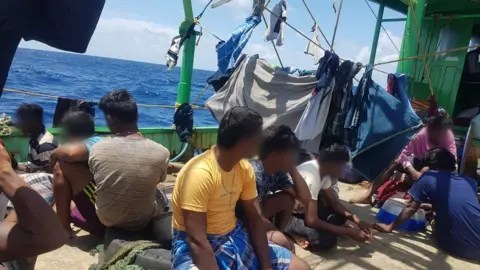
Of All Places! Lankan Asylum Seekers stranded in Diego Garcia

News Item in The Island , 23 July 2024 … where the title reads Urgent request to relocate Lankan asylum seekers from Diego Garcia amid escalating crisis”

Facing an urgent and escalating threat of harm to migrant children detained on Diego Garcia, British Foreign Secretary David Lammy requested their relocation to the UK on July 16th, as reported in the Solicitors Journal. This request to Home Secretary Yvette Cooper follows a warning from the British Indian Ocean Territory (BIOT) Commissioner, who reported severe living conditions and recent suicide attempts among the detainees....visit The Island web-ref for  photo of  this cluster of refugee boat people

Continue reading

1 Comment

Filed under accountability, anti-racism, asylum-seekers, Britain's politics, centre-periphery relations, charitable outreach, communal relations, demography, disparagement, economic processes, ethnicity, governance, historical interpretation, life stories, politIcal discourse, refugees, security, self-reflexivity, slanted reportage, sri lankan society, trauma, travelogue, world events & processes

A Ceylon Cricket Eleven in Late 1958 …. Its Ethnic Mix

Michael Roberts

Having come across “a drenching cricket story” from late in the year 1958  in my CRICKETIQUE website,  let me place it within THUPPAHI for reflection because the Cricketique site can be visited and read…  BUT is not readily open for comments or visited much.

The LEAD PHOTO is of considerable significance because of the ethnic mix in Sri Lankan team — inclusive of a Malay man and another with Colombo Chetty lineage roots.

Continue reading

Leave a comment

Filed under anti-racism, communal relations, cricket for amity, cricket selections, education, ethnicity, heritage, historical interpretation, landscape wondrous, life stories, patriotism, performance, politIcal discourse, self-reflexivity, Sri Lankan cricket, sri lankan society, travelogue

Let’s Remove the Colonial Tropes in the Writings on Sri Lanka

Darini Rajasingham-Senanayake, whose preferred title is  “Decolonizing July 1983’s Fiction and History for a Post-Ethnic Sri Lanka: Tropes of Violence and Cold War at the end of the American Century”

 “Fair is foul and foul is fair”William Shakespeare, Macbeth

 !@#$!!!! …. The Editor’s efforts to insert appealing cartoons and/or pictures of Macbeth were defeated by the digital world’s capitalist principles & demands for payment

Why are there no Booker Prize-winning novels about mundane multicultural families that inter-married for generations, shared religion/s, language/s and co-existed for centuries, while living in relative harmony in Ceylon/ Sri Lanka? Is the trope of dark natives engaged in endless chaotic violence an international literature prize-winning bestseller that masks white mischief, including sanitized, techno-scientific AI guided drone warfare? Susan William’s brilliant and brave book “White Malice” is subtitled, “The CIA and the Covert Recolonization of Africa’.

Continue reading

1 Comment

Filed under accountability, anti-racism, authoritarian regimes, British colonialism, chauvinism, communal relations, cultural transmission, democratic measures, demography, economic processes, governance, heritage, historical interpretation, Indian Ocean politics, island economy, language policies, Left politics, life stories, modernity & modernization, parliamentary elections, patriotism, politIcal discourse, power politics, self-reflexivity, Sinhala-Tamil Relations, social justice, sri lankan society, world events & processes

Vale: An Appreciation of Malathi De Alwis … Researcher & Writer

Geethika Dharmasinghe, in Colombo Telegraph, 23 January 2021, where the title reads as “Our Malathi”… presented here with emphasis imposed by The Editor, Thuppahi

She was the first woman in Sri Lankan politics after Kumari Jayawardena to build an awareness on the role of woman and of her ‘traditional’ position, uniting academic work and politics. She is an anthropologist, and a feminist activist. Her activism and scholarly interests were in understanding militarization, motherhood, and the role of memories in the context of nationalist histories.

 Dr. Malathi de Alwis

Dr. Kumari Jayawardena

Continue reading

Leave a comment

Filed under accountability, anti-racism, art & allure bewitching, British colonialism, centre-periphery relations, commoditification, communal relations, constitutional amendments, cultural transmission, democratic measures, economic processes, electoral structures, ethnicity, female empowerment, governance, heritage, historical interpretation, island economy, language policies, Left politics, life stories, modernity & modernization, nationalism, parliamentary elections, politIcal discourse, power politics, press freedom & censorship, racism, self-reflexivity, Sinhala-Tamil Relations, sri lankan society, truth as casualty of war, unusual people, war reportage, welfare & philanthophy, world events & processes