Category Archives: accountability

The Conquista: A Book on Sri Lanka’s Portuguese Period

Avishka Mario Senewiratne

Fr SG Perera who translated the work of Queiros

In an island nation which has more than two thousand five hundred years of written history, no book has provided a more detailed account of any period of Sri Lanka’s history than the Temporal and Spiritual Conquest of Ceylon[1] authored by the Jesuit Father Fernaó de Queyroz.[2] This work covered the 150 years of Portuguese involvement in Ceylon. Ironically, this 17th century Jesuit Priest, had never visited the island of which he was researching and writing in the final two decades of life. This brief essay gives an overview of Queyroz the Historian, his cause and objective, the long and eventful delay of his work in reaching its readers, the controversy around it in the early 20th Century and its splendid translation by Fr. Simon Gregory Perera of the same Society.

Continue reading

3 Comments

Filed under accountability, atrocities, authoritarian regimes, centre-periphery relations, commoditification, cultural transmission, discrimination, ethnicity, governance, heritage, historical interpretation, Indian Ocean politics, landscape wondrous, life stories, literary achievements, Portuguese imperialism, Portuguese in Indian Ocean, power politics, religiosity, sri lankan society, the imaginary and the real, travelogue, unusual people, world events & processes

Hobson’s Choice in Lanka …. The Same Again Manikey! Kota Uda!

Capt. Elmo Jayawardena, whose preferred ttile is “Hobson’s or “Homben Yana” Choice?” 

Way back in the 16th century there lived a man in Cambridge by the name of Thomas Hobson.

He rented and sold horses and was the proud owner of a stable that had 40 stallions of all colours and breeds. Anyone who wanted to rent a horse from him to ride the paddock or journey into the far horizon, paid money and got a horse. There was one condition, the renter was not allowed to select the horse. The ‘wanna be’ rider had only one choice. He had to take the horse that was in the stall nearest to the door. It was a simple matter of either ‘take it or leave it.’  When the word spread about this, it became known among possible horse renters that what they got was ‘Hobson’s Choice’.

Continue reading

Leave a comment

Filed under accountability, coronavirus, disparagement, economic processes, island economy, life stories, meditations, politIcal discourse, sri lankan society, the imaginary and the real, trauma, working class conditions

Addressing History: Sri Lankan Identities over Time

HistoricalDialogue.lk

Dear Friends of HistoricalDialogue.lk, …. We’re happy to announce the launch of our new podcast series, ‘Witnesses to History’. Hosted by Smriti Daniel, the tri-part series is now live on our website and takes you on a journey through Sri Lanka’s history as living memories. Listen to the first episode ‘Holders of History’ which gives an insight into our shared understanding of identity and our shared past – Episode 01 ( 28 mins). Follow the link to also view some exciting bonus material that is archived on the page.

Continue reading

Leave a comment

Filed under accountability, cultural transmission, democratic measures, female empowerment, heritage, historical interpretation, life stories, literary achievements, meditations, performance, politIcal discourse, sri lankan society, travelogue, truth as casualty of war, unusual people, welfare & philanthophy, world events & processes

Leonard Woolf’s Weliwewa Terrain: Gerald Peiris’s Profound Expertise 

Michael Roberts

I have sustained a friendship and interacted with Gerald Peiris from Ramanathan Hall days at Peradeniya University beginning in July 1957. The formal discussions organised at the Ceylon Studies Seminar from 1968-1975 on the one hand and, on the other, casual, but occasionally dynamic, conversations at the Senior Common Room or the Campus Pub in those halcyon years deepened our cooperation …. and continually sharpened my brains.

Continue reading

1 Comment

Filed under accountability, British colonialism, centre-periphery relations, cultural transmission, economic processes, heritage, historical interpretation, island economy, landscape wondrous, life stories, modernity & modernization, politIcal discourse, self-reflexivity, sri lankan society, travelogue, unusual people, welfare & philanthophy, working class conditions, world events & processes

Leonard Woolf’s WELIWEWA and Its Terrain

Gerald Peiris**

After getting the article in Thuppahi on Leonard Woolf and Silindu presented by Ernest MacIntyre, I read Village in the Jungle (for the second time since long ago) and found it difficult to connect the essence of the Woolf narrative with what the producers of the play referred to as an attempt to portray village like in a remote setting in the interior of the ‘deep south’.

Leonard Woolf in his aging years & glimpses of village women gathering tank-water in 2oth century Ceylon

Continue reading

2 Comments

Filed under accountability, British colonialism, centre-periphery relations, commoditification, cultural transmission, economic processes, ethnicity, historical interpretation, island economy, landscape wondrous, life stories, literary achievements, modernity & modernization, population, self-reflexivity, social justice, sri lankan society, unusual people, welfare & philanthophy, working class conditions

The Old and Sturdy Dutch Fort in Galle

“Everyman” writing for The World Heritage Sites of Sri Lanka, with this title “The Old Dutch Town of Galle” 
  Cricket in the 1980s –Pix by Nihal Fernando
Volleyball, it is claimed, is our national sport. However there is no doubt that Cricket is the most popular sport in Sri Lanka. That popular West Indies calypso ‘Cricket, lovely cricket.’,’ will always be ringing in our ears. From the villages where youngsters from around 16 to 26 or maybe even older, use ‘polpithi’ bats, to the towns where more sophisticated young men use willow bats, it is cricket, cricket and more cricket. Little wonder then that we have been correctly described as ‘ a cricket crazy nation.’ And when it comes to grounds for international matches the Galle International Stadium is the most favored by our cricketers, our coaches and our spectators. The reason is that as at today (03. 05 .21), 34 Test Matches [have been] played on these grounds of which Sri Lanka won 19 and lost only eight. In addition to this, in a press release datelined June 8, 2020, Yash Mittal an avid lover of cricket has listed five of the most picturesque cricket grounds in the world. And yes – you have guessed it – the Galle cricket grounds, cradled between the Galle Fort and the Indian Ocean, heads the list!

Continue reading

1 Comment

Filed under accountability, architects & architecture, cricket for amity, economic processes, heritage, historical interpretation, island economy, landscape wondrous, life stories, patriotism, photography, rehabilitation, self-reflexivity, sri lankan society, the imaginary and the real, tourism, travelogue, unusual people, world events & processes

Vicious Victimization of Dr Danielle by the Western Cabal and THE AGE

Fair Dinkum

For telling the truth about Wuhan as she knew it, this Australian virologist Dr Danielle Anderson has been  attacked, smeared and had her life threatened because her statement did not align with American Australian narratives about the origins of covid19. She was sent a threatening email that read, “Eat a bat and die, bitch.” The threatening emails continue and the Singapore police are taking it seriously  The anti-China campaign has become hysterical, insane and extremely dangerous as it spreads around the world,  with the help of Western governments.

Continue reading

Leave a comment

Filed under accountability, american imperialism, atrocities, australian media, British imperialism, centre-periphery relations, coronavirus, disparagement, doctoring evidence, economic processes, historical interpretation, life stories, news fabrication, power politics, propaganda, slanted reportage, taking the piss, terrorism, vengeance, violence of language, world events & processes, zealotry

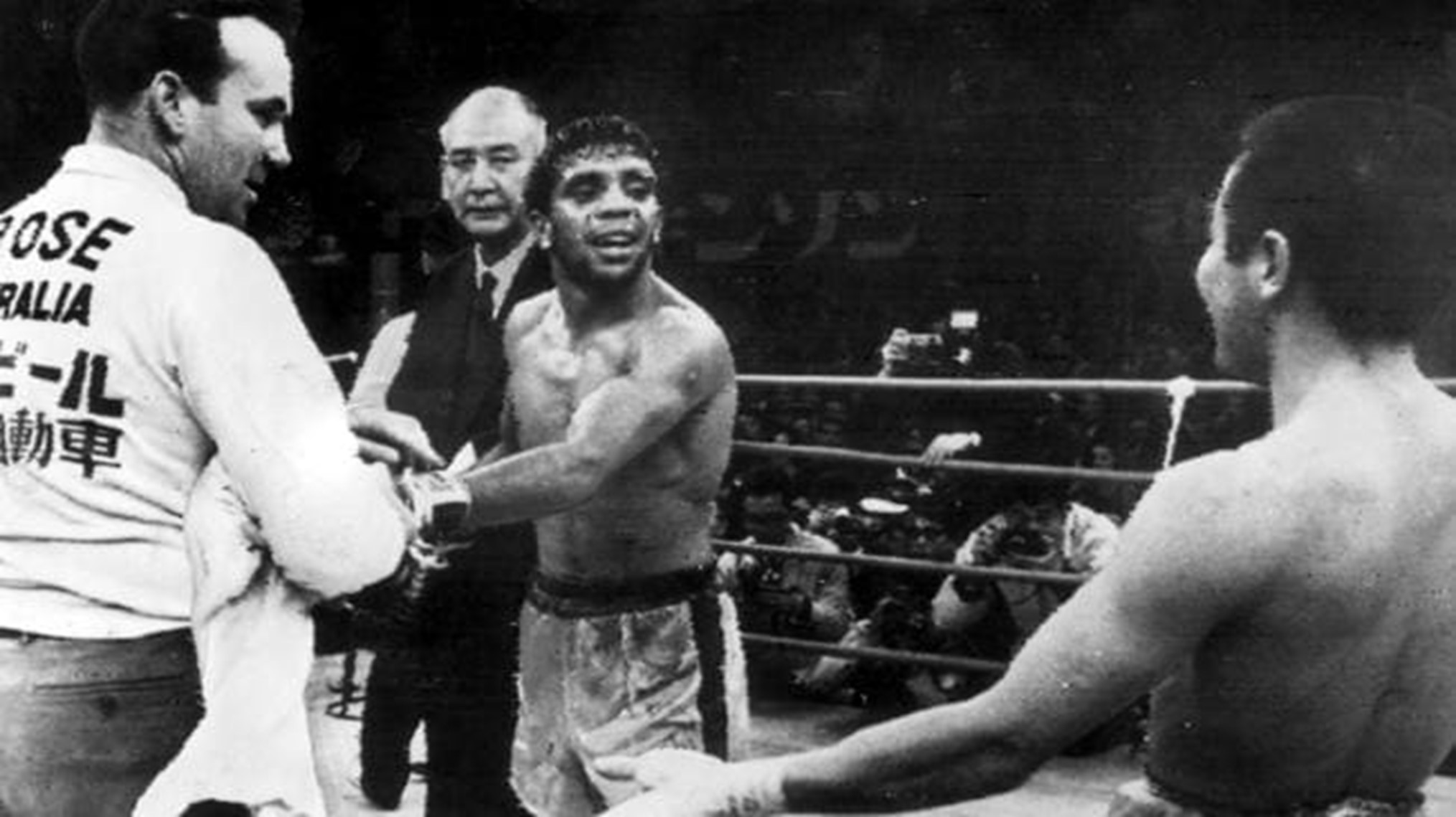
Lionel Rose: Aboriginal Boxer who united Australia

Will Swanton, in The Weekend Australian, 3-4 July 2021, where the title runs “Lionel Rose: battler who united Australia” 

Lionel Rose unified the nation more powerfully than Bradman, if more briefly — Bradman never had 250,000 cheering him through the streets.

Lionel Rose turns to embrace Fighting Harada … after he is pronounced the winner 

Lionel Rose met Paul Keating. Snipped him for a hundred. The Prime Minister reckoned he never carried any cash. Rose persisted. Did him slowly. Come on, mate. Can’t you spare a lousy hundred for a battler? Larrikinism abounded in Australia’s sporting stars of the 1960s and 1970s. Rose, Dawn Fraser, John Newcombe, larger than-life characters. It was the 1990s by the time Rose hit Keating where it hurt. The hip-pocket. Mischievousness was alive and kicking in Rose, and part of the reason for the request, but he needed the dough, too.

Continue reading

2 Comments

Filed under accountability, art & allure bewitching, Australian culture, australian media, communal relations, cultural transmission, democratic measures, discrimination, economic processes, education, ethnicity, heritage, historical interpretation, landscape wondrous, life stories, patriotism, performance, politIcal discourse, self-reflexivity, social justice, the imaginary and the real, unusual people, world events & processes

False Claims of Aboriginality in Australia …. NOW a Problem

 Catherine Overington, in The Australian, 2 July 2021, where the title runs thus: “Harmful: warning to ‘race shifters’,” …. with underlining imposed by The Editor, Thuppahi

In the US they are known as “race-shifters”; in Canada they are “Pretendians”; and in Australia, they are more commonly known as “box-tickers” – people who discover, or else simply claim an Indigenous or First ­Nations heritage for themselves.

Some do so because they want to adopt a more exotic profile; others because being “just white” doesn’t have quite the cache it once did, especially in academia. But the sheer number of ­people now laying claim to an ­Indigenous identity has begun to distort national statistics, at least according to Indigenous Australian academics and a group of international writers who took part in a lively roundtable on the topic of “race-shifting” at an anthropology conference in May.

Continue reading

2 Comments

Filed under accountability, ancient civilisations, Australian culture, australian media, centre-periphery relations, communal relations, discrimination, economic processes, heritage, historical interpretation, landscape wondrous, life stories, performance, self-reflexivity, the imaginary and the real, unusual people, world events & processes

Industrialization in Lanka!! Searing Comments on Athukorale’s Article

ONE: A NOTE from Mevan Pieris in Colombo, 1 July 2021[i]

The underlining in bold Black is HSM Pieris’s work; that in red has been imposed by the Editor, Thuppahi….. and so, too, any red underlining in Vinod Moonesinghe’s intervention. Both sets of Comments were sent by Email in response to my invitation to a cluster of personnel.

Thanks Michael. Read with interest Premachandra Atukorala’s paper…. [viz. https://thuppahis.com/2021/07/01/an-appraisal-of-sri-lankas-industrialization-strategy/#more-52644%5D

The platform JR Jayawardene Government laid starting in 1977 for an industrial revolution supported by availability of adequate hydroelectric power, was dashed on the ground by the LTTE war with Indian interference, which was beyond even for JRJ to manage in his second term of office. Thereafter the assassinations of strong political successors to JRJ too diluted the leadership of our country. An industrial revolution can only be sustained by a continuity of strong leadership; but with the assassination of Lalith Athulathmudali and Gamini Dissanayake we lost all of it. Leave alone policy making, not even the Central Bank could be protected. So why waste time trying to figure out what went wrong in industrial policy.

Continue reading

4 Comments

Filed under accountability, centre-periphery relations, economic processes, governance, historical interpretation, island economy, life stories, modernity & modernization, performance, power politics, self-reflexivity, social justice, sri lankan society, taking the piss, the imaginary and the real, truth as casualty of war, welfare & philanthophy, working class conditions, world events & processes