Yearly Archives: 2012

Technology and its Politics in Cricket — Mahela on the DRS

Michael Roberts

Tony Greig is a wide-ranging and perceptive commentator. We should be thankful that he took the opportunity of raising the issue of the DRS system on the morning of the second day of the Second Test Match at the P Sara when interviewing Mahela Jayawardene. This moment of review was inspired by the fact that Mahela had called in the DRS review when he was given out LBW by Rauf or Oxenford (I forget whom) in the 80th over – a crucial decision that influenced the subsequent unfolding – and unravelling – of the Sri Lankan innings …. In short a turning point as seen in retrospect. Continue reading

1 Comment

Filed under accountability, tolerance, unusual people, world affairs

Engeltine Cottage in Kandy: The Intertwining of Three Families — Pieris, Sangakkara and Krishnapillai

Michael Roberts

Engeltine Cottage stands on the hill slopes below Dharmaraja College overlooking the eastern part of Bogambara Lake which stands at the heart of Kandy (or Senkadagala or Mahanuvara as it used to be known). It is a spacious home set in substantial grounds. Its tale of emergence, decline and restoration over the last 150 years is a serendipitous one, befitting an island which was sometimes called “Serendib” and is thereby said to have generated the English noun “serendipity” way back in Horace Walpole’s time.

As far as I can ascertain the house was built in 1896[i] by Louis Pieris Snr. of the Hännädigē Pieris lineage on a cocoa plantation property he had acquired, one which extended from the eastern end of Bogambara Lake to near the Ampitiya Seminary and which at one time included a section that served as a cemetery for British personnel who had died of malaria.[ii] But before taking up these details, we must hark back to the island in the eighteenth century – paralleling Walpole’s time – if we are reach this moment by attending to the roots of social mobility that enabled a lineage of Low-country Sinhalese origin to embed itself so firmly in the centre of Kandyan country. Continue reading

26 Comments

Filed under cultural transmission, heritage, historical interpretation, life stories, sri lankan society

Placing the Sri Lankan War in Context and Critquing Indian Vote at UNHCR Sessions

Ajai Sahni, in SATP, 2 April 2012, with this title: “India – Sri Lanka Relations: India’s Feckless UNHRC Vote A Disgrace”

Through history, few countries in the world have had to endure a terrorist movement as protracted, vicious and intense as the Liberation Tigers of Tamil Eelam (LTTE) campaigns, which lasted over thirty three years and killed, on some estimates, up to 80,000 people, in a tiny country with a present population of under 21 million.

Few countries in the world have secured as clear and demonstrable victory over terrorism as has Sri Lanka, even where extraordinary and indiscriminate violence has been inflicted on large populations, as, for instance, in Vietnam, Iraq, Afghanistan and Pakistan, where civilian settlements have been repeatedly targeted, and ‘collateral damage’ often overruns any rational proportion to legitimate targets. Continue reading

3 Comments

Filed under accountability, democratic measures, historical interpretation, IDP camps, Indian Ocean politics, law of armed conflict, LTTE, military strategy, politIcal discourse, power sharing, reconciliation, rehabilitation, Sinhala-Tamil Relations, sri lankan society, Tamil civilians, Tamil Tiger fighters, terrorism, truth as casualty of war, world affairs

Sheridan rails against lax Australian policy towards boat people

Greg Sheridan,**  in The Weekend Australian, 31 March 2012

CONSIDER this moment. The young jihadist Mohamed Merah, 23, a Frenchman of Algerian background, has recently killed three French soldiers, two of African heritage and one West Indian. He did this to avenge the actions of French soldiers in Afghanistan. He said to one of the soldiers he killed: “You killed my brothers; I kill you.” Continue reading

Leave a comment

Filed under asylum-seekers, australian media, cultural transmission, discrimination, disparagement, fundamentalism, politIcal discourse, racist thinking, religious nationalism, truth as casualty of war, world events & processes

Tamil Grievances at Grass-roots -Two Reports from the North

The Myriad Social Issues Facing People In The North — Raisa Wickrematunga in Sunday Leader, 1 April 2012

Tisha* wears a pale pink skirt and blouse. She squints at us through her glasses, wearing a resigned look. She is one of the many people who were displaced by the war. Forced to leave home in the 1990s in Vavuniya, she returned to her home as soon as it was safe, as part of the rehabilitation process in October 2009. Through the UNHCR, she received the standard immediate relief package- 16 tin sheets, eight bags of cement, and Rs. 5000.
Tisha hasn’t received anything since. Settling back in Nochchimoto, Vavuniya, she built a makeshift house out of what she was given. Shortly after, her parents died of old age. Now, Tisha has no hope of gaining a proper home, not even in the housing schemes built specially for the newly resettled, because she is on her own, and the housing authorities do not think it efficient to give a large house to just one person. She stays with relatives at night, but would like a house to call her own. Continue reading

Leave a comment

Filed under politIcal discourse, Sinhala-Tamil Relations, sri lankan society, Tamil civilians, tamil refugees, welfare & philanthophy

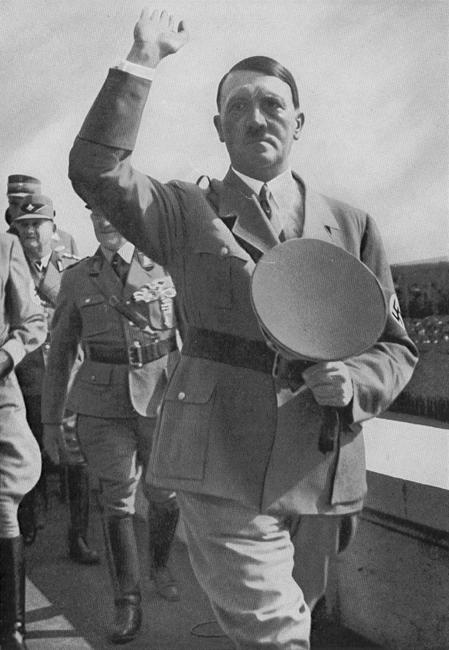
Hitler’s parents’ grave in Austria: headstone removed

Courtesy of the Associated Press, http://www.usatoday.com/news/world/story/2012-03-30/hitler-parents-grave/53893852/1

The tombstone marking the grave of Adolf Hitler‘s parents, Continue reading

Leave a comment

Filed under Hitler, life stories, patriotism, politIcal discourse, world events & processes

Tiny but meaningful steps towards job-creation in the north? Two News Items

Vocational Training for Ex-LTTE CombatantsNews Item in the Nation, 25 March 2012

The army recently launched a crab farming project in the North that provided job opportunities for a few of the former ex-combatants. The government has ensured that former combatants or beneficiaries, who have been reintegrated back into the society, are provided with job opportunities that would keep them occupied.

The government has focussed on the issue so that the youth do not idle, lest they resort to violence to earn a living. The beneficiaries have been provided jobs in several sectors and assistance have been provided to ensure they are not left stranded after reintegration. The Army too has been working towards this aspect and has provided ample opportunities to the beneficiaries.

In another effort to uplift the living standard of reintegrated former combatants and their close relatives, various government and civil institutes have come forward to assist the Headquarters Security Forces – Jaffna (SF-J) by way of providing financial assistance, donations and giving vocational training to ex-combatants which enable them to engage in self-employments.

Administrative authorities of Dreamron Lanka (Pvt) Ltd of Kohuwala, at the request of Commander Security Forces – Jaffna (SF-J) Major General Mahinda Hathurusinghe, recently sent a team of hair dressing and beauty culture experts to Jaffna to conduct a five-day training programme for ex-LTTE members in the peninsula. The programme was conducted by five representatives of the Dreamron Lanka (Pvt) Ltd from February 16 to 20 at the Civil Affairs and Public Relations Office, Jaffna. Continue reading

1 Comment

Filed under communal relations, cultural transmission, life stories, reconciliation, rehabilitation, Sinhala-Tamil Relations, Tamil civilians, welfare & philanthophy, women in ethnic conflcits

Friday Forum pushes for Implementation of the Key Recommendations of LLRC Report

Island, 29 March 2012

The Friday Forum is an informal gathering of public spirited persons wishing to contribute to the future development of Sri Lanka within a framework of democracy, social justice and pluralism. It is in that spirit that we wish to share some of our concerns with the wider public.

The Friday Forum welcomed the setting up of the Lessons Learnt and Reconciliation Commission and co-operated constructively by making representations before it. In November 2011, the Commission produced its final report which, though not meeting all our expectations, could form the basis for building national reconciliation in our country. We now wish to stress the importance of the early implementation of the recommendations, especially those flagged by the Commission for immediate and short-term implementation. Continue reading

Leave a comment

Filed under accountability, communal relations, island economy, language policies, politIcal discourse, power sharing, reconciliation, rehabilitation, Sinhala-Tamil Relations, sri lankan society, Tamil civilians, tolerance, welfare & philanthophy

Jane Russell on Nationalist Extremism on Both Sides in the 1970s et seq

Jane Russell was a postgraduate student at the History Department, Peradeniya University, in the early 1970s and stayed on in Sri Lanka for two decades after completing her dissertation;[i] and left only because she was deported. I had lost touch with her till she popped up as a blogger adding some useful information about her interaction with Handy Perinpanayagam, the architect of the Jaffna Youth League in the 1930s, in response to Rajan Philips’s article on the JYL.[ii]

She also chose to add an informative comment in my masthead essay on “The Sinhala Mindset.” This comment is far too important to be buried in that arena, so it is given the spotlight here.

I also took the opportunity to ask Jane for more information on a critical piece of data she had supplied me then, circa 1973/74, an item that contributed to my conclusion THEN that Sri Lanka would probably ‘progress’ towards a severe conflict of the type seen in Cyprus, Lebanon and Northern Ireland. She responded by email so these two items are also tacked on here: namely, (A) the WHY and WHEREFORE of my query; and (B) Jane Russell’s detailed information. Michael Roberts.

JANE RUSSELL: Comment on The Sinhala Mindset

Thanks for your thoughtful and reasoned comments on the Sinhala mind-set with which I totally agree. However, it takes two to tango… the Jaffna (and to a lesser extent East coast) Tamils also have a similar mind-set. At their back they feel the power of 60 million or so south Indian Tamils who give them assurance that they too can turn a part of Sri Lanka (the north-east) into a whole — a Tamil whole. Thus we had the claims of 50-50 before independence (which many Sinhalese and Tamils understood to be 50% of Sri Lanka for Tamils and 50% for Sinhalese — it was not this at all but the slogan carried the idea that it might be). Continue reading

8 Comments

Filed under historical interpretation, Left politics, life stories, patriotism, politIcal discourse, prabhakaran, Sinhala-Tamil Relations, sri lankan society, Tamil civilians, Tamil Tiger fighters, unusual people, world events & processes

Two Contrasting Statements on the Northern Province: ICG and Narendran

International Crisis Group:  Sri Lanka’s North: Recipe for Renewed Conflict

Colombo/Brussels, 16 March 2012: The Sri Lankan military’s control over the political and economic life of the Northern Province is deepening the alienation and anger of northern Tamils and threatening sustainable peace.

Sri Lanka’s North I: The Denial of Minority Rights and
Sri Lanka’s North II: Rebuilding under the Military
, the two latest reports from the International Crisis Group, examine how de facto military rule and various forms of government-sponsored “Sinhalisation” of the Tamil-majority region are impeding international humanitarian efforts, reigniting a sense of grievance among Tamils, and weakening chances for a real political settlement to devolve power.

“The construction of large and permanent military cantonments, the seizure of private and state land, and the military-led cultural and demographic changes – all threaten Sri Lanka’s fragile peace”, says Alan Keenan, Crisis Group’s Senior Analyst and Sri Lanka Project Director. “Instead of giving way to a process of inclusive, accountable development, the military is increasing its economic role, controlling land and seemingly establishing itself as a permanent presence”. Continue reading

1 Comment

Filed under NGOs, politIcal discourse, propaganda, Rajapaksa regime, reconciliation, rehabilitation, Sinhala-Tamil Relations, sri lankan society, Tamil civilians, welfare & philanthophy, world events & processes