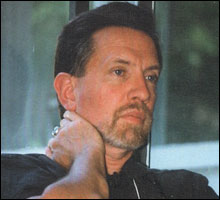
Emilio Gentile in Q and A with David Hulme, courtesy of http://www.vision.org/visionmedia/article.aspx?id=15471
 It’s often said that politics and religion don’t mix. Is that because humanity has learned not to mix the two, or because every time we do there’s a problem? What happened in the 20th century that made Mussolini, Stalin, Hitler and Mao appeal as saviors? In Vision’s series Messiahs! Rulers and the Role of Religion, we explored the history of such leaders across centuries and continents. Times of extreme crisis cause people to look for someone to deliver them. If the desperation is great enough, good judgment is too often compromised and individuals who would not otherwise gain broad support rise to power, often with strong religious overtones.
In the following wide-ranging interview conducted in Rome, Vision publisher David Hulme discusses politics and religion—and politics as religion—with Italian author and historian Emilio Gentile.
DH You have written a lot about “the sacralization of politics.” What do you mean by the term?
EG I mean that some secular entity in politics, like “the Fatherland,” “the Race,” “the Revolution,” “the Proletariat,” becomes absolute and requires obedience from people who believe that such an entity is the giver of the meaning of life, for which you should be willing to sacrifice your life. In any nation you sacrifice your life in war to save the country. In this way, the country becomes a secular god. Continue reading