Category Archives: reconciliation

Antiquated language teaching methods block goal of a trilingual police force

Olindhi Jayasundera, in the Daily Mirror, 6 October 2011: “People want a Trilingual Police force”

Presidential Advisor and Coordinator of the Presidential Initiative for a Trilingual Sri Lanka Sunimal Fernando said people had requested for the government to set up a trilingual police system at the earliest time possible. “They don’t want ethnic Tamil people in the North and Sinhala people in the South.” he said. The Presidential Secretariat said yesterday that when people were requested to send in their recommendations to be added in the country’s ten year trilingual national plan one of the suggestions that stood out was the people’s interest in changing the Sri Lankan Police Force into a strictly trilingual based one.

He said another recommendation was to change language teaching methods in the country. “We were informed that people find it difficult to learn Sinhala, Tamil and English due to the outdated methods practiced in the country as opposed to methods practiced abroad where language is taught through activities,” he said. He said that only 1.5% of the public sector receives training in the second language for a year. “To train the public service at the present rate of progress in bilingual training it would take about 100 years. This is the state of language use in Sri Lanka right now,” he said.  The Presidential Secretariat has called on the public to send their comments and suggestions to the council.

Leave a comment

Filed under accountability, communal relations, democratic measures, language policies, life stories, power sharing, reconciliation, Sinhala-Tamil Relations, sri lankan society

Bikes for Basics: A Cross-country Ride for Tamils in Mankulam … and Beyond

Mankulam, a town in Northern Sri Lanka which was devastated by the recent civil war, lasting for three decades.  In 2011 the violence is now finally over, villagers are returning to repair their homes, tend their abandoned farms and gradually rebuild their lives. This task is an arduous and demanding one, with little access to water, food, electricity and public transportation, life is hard and children walk up to 10km daily to continue their education at the local school.

The bicycle has been an integral part of the landscape and a popular mode of transport for many years in Northern Sri Lanka.  Economically viable, requiring a third of the energy of walking and moving at four times the speed, the bicycle is a prized family possession shared by all. It enables women to access essential food and vegetables from the local market, allows men to seek employment far from their homes and assists community members in taking their home grown produce to the town market. Known as a “Veerayah” in the local Tamil dialogue, the sturdy bicycle often transports the entire family – a child on the cross bar and another on the back behind the rider.

Recognizing that bicycles are an expression of self freedom, a contributor to the alleviation of poverty and a symbol of empowerment to the whole society, three British volunteers are embarking on a ride from Seenigama to Mankulam to raise money for new bicycles for the northern communities. They start on October 21st from Seenigama, a village in the rural South, devastated by the 2004 Boxing Day tsunami and cycle over 400 km in less than 5 days to Mankulam in the rural North. Both of these rural towns have deep links with the charity, the Foundation of Goodness, headed by local entrepreneur and humanitarian, Kushil Gunasekera and international cricket star, Muthiah Muralidaran, the organization helped rebuild Continue reading

Leave a comment

Filed under accountability, communal relations, cultural transmission, life stories, reconciliation, rehabilitation, Tamil civilians, tamil refugees, welfare & philanthophy, world events & processes

Being a Tamil under the LTTE: Teacher Murugesu speaks out

Courtesy of the Sunday Observer, 2 October 2011 where the title is  “Tamil, Sinhala or Muslims of Wanni long for Alternative Leadership”

Web Editor’s Note: While the appearance of this news rport in translation form the Thinakaran in a government-run newspaper may generate scepticism, I think this is ahighly significant representation from hard-earned expereince. I stress here that I have myself sought information on conditions in Thamililam in the period 1995-2009 inclusive of the ceasefire stages with an eye on the degree of support for the LTTE. My information garnered thus far is fragmentary, but Anoma Rajakruna was working  intermittently on the topic of female empowerment in LTTE land in the mid-2000s and indicated that the poltical sentiments of people were constrained by the degree to which their family networks depended on the LTTE dispensation for daily livelihood — precisely the message conveyed by Murgesu the teacher. One should also attend to the title of the book conveeing NBen Bavinck’s diary record, namely, Of Tamils and Tigers and the evidence that is presented on the years 1989-1992 in Volume One. Michael Roberts

Any Tamil who lived through the horrors and unimaginable human sufferings during the last battle at Mullivaikkal in Mullaitivu would never even dream of leading the Tamils in the path of another war. The bitter memory of it is indelibly registered in the minds of the people of the Vanni and it is they who directly encountered the dire consequences, burdens and untold sufferings caused by that last battle. Nor do they have any right to talk about the last stages of that bitter battle. Anyone who witnessed the happenings of May 19 will never think of forcing the Tamils into another war”– So said an emotionally-charged Vanni resident Ariyakutty Murugesu, one time teacher and the father of two former LTTE women cadres. He was one among those who suffered and experienced the heart-rending tragedies and miseries of the last battle. He is a man of an intellectual calibre. He was a teacher at several schools in the Northern peninsula and had also worked as a freelance journalist, including for the Lake House publication .

Speaking out his mind in a brief interview with Thinakaran, our Tamil language daily, he said that the war was forced on the people of Kilinochchi, Mullaitivu and Mannar and they had to Continue reading

Leave a comment

Filed under accountability, authoritarian regimes, communal relations, democratic measures, IDP camps, liberation tigers of tamil eelam, life stories, LTTE, military strategy, politIcal discourse, prabhakaran, Rajapaksa regime, reconciliation, rehabilitation, Tamil civilians, tamil refugees, Tamil Tiger fighters, unusual people, welfare & philanthophy

Arun Thambimuttu steps out as a Tamil and Lankan Patriot — like Father like Son

Q and A Interview with Rohan Abewardena, in The Island, 25 & 26 September 2011 under title “Batti political family scion beckons Tamils”

Q: You have grand ideas, but you are yet relatively unknown here as a businessman and politician so can you tell us something about your self and your background.

I come from a famous political family in Batticaloa. My father was Sam Tambimuttu, a member of parliament. He was assassinated by the LTTE along with my mother in 1990. They were gunned down in front of the Canadian High Commission at Gregory’s Road. My mother passed away ten days after the shooting. At the time I was about 14 years of age. After the assassination of my parents I went to UKand did my secondary and higher education there. I obtained a degree in economics from theUniversity ofDurham. Then I got involved in investment fund management and I lived away for 20 years. I returned toSri Lanka three times after the assassination of my parents – all three times to renew my passport. I still hold a Sri Lankan passport. I never took a foreign citizenship. I never thought the day would arrive when I would come back to Sri Lanka and specifically to Batticaloa where we are hailing from. When I came back it struck me, it struck me a lot because I travelled the length and breadth of Eastern Province and Sri Lanka as a whole. I always knew our country is very beautiful and resourceful, but if you look at the past 60 years, since independence I feel we failed. We failed in many areas, but primarily our resources and what we have been given in this blessed island,

Sam Thambimuttu  but we have not achieved our full potential. So I had to ask questions, especially about Batticaloa, because I feel Batticaloa is immensely resource rich, but nothing has moved. People have not exploited the natural resources of the region. People are still quite poor with lot of unemployment. So I began to ask questions because my family members were part of the political process there. My mother’s father, Senator Manickckam was one of the founding leaders of the Federal Party along with H.A.V. Chelvanayakam. My father of course was a representative of TULF and my mother was an activist from the late 60s. My great granduncle was also a State Council member. He was more a Ceylonese nationalist and not a Tamil nationalist       … [For a note on the assassiantion of Sam Thambimuttu in Ben Bavinck’s diary see the end of this item in thuppahi].

Continue reading

1 Comment

Filed under accountability, communal relations, cultural transmission, democratic measures, island economy, life stories, LTTE, patriotism, politIcal discourse, power sharing, Rajapaksa regime, reconciliation, rehabilitation, Tamil civilians, tolerance, unusual people, voluntary workers, world events & processes

A Tiger Wheeler-Dealer & Two Conscripts recant and reject Tiger cause

Item by S. Thilainathan in  the government rag, Daily News, 30 Sept. 2011

Sasikumar- From D-News

Sarachandran in Thamililam during visit –Pic courtesy of National Post

Two Tamil youths, Kumaravel Sasikumar and Gunasingham Visaban who underwent immense suffering due to LTTE atrocities, in an exclusive interview, praised President Mahinda Rajapaksa for his exemplary leadership in completely eradicating LTTE terrorism from our motherland. They also said that if the President had not given directions to the Armed Forces to end this 30-year-old terrorist war despite mounting foreign pressure, Sri Lanka would have continued to be in turmoil even today.

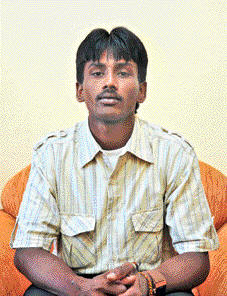
Ex-LTTE cadres, 21-year-old Kumaravel Sasikumar was born in Homagama. Thereafter his parents who are from Vavuniya settled in the Vanni area. Sasikumar said that in 2006 when the A9 road was completely closed down due to mounting LTTE violence, he was trapped in Visvamadu. During this period, the LTTE started to replenish its depleting cadres by forcefully dragging innocent boys and girls, ignoring their unwillingness to join the LTTE cadres. Continue reading

1 Comment

Filed under accountability, authoritarian regimes, liberation tigers of tamil eelam, life stories, LTTE, Rajapaksa regime, reconciliation, rehabilitation, Sinhala-Tamil Relations, Tamil civilians, Tamil migration, tamil refugees, Tamil Tiger fighters, terrorism, world events & processes

Sandwiched in between: Tamil Dissidents and Others in the Furnace of War & its Killings, January 1989-December1990 via Ben Bavinck’s Diary

Sharika Thiranagama rides a bike in emulation of her mother Rajani Thiranagama nee Rajasingam for the biographical documentary NO MORE TEARS

As the ethnic conflict in Sri Lanka escalated from July 1983 and the Tamil liberation struggle developed along several militant paths, Tamils throughout the island were placed in a difficult position. The focus here is on the sentiments of those identified in the census as “Sri Lanka Tamils” as distinct from “Indian Tamils” – wherever they resided in the island.[1]

But within this framework the emphasis is on those Sri Lankan Tamils who resided in the northern and eastern parts during the period extending from August 1988 to October 1992, the time spanned by the first volume in Ben Bavinck’s diaries. Note, here, that Bavinck was a fluent Tamil speaker and because of his long experience in the Jaffna Peninsula in the 1950s-70s he was, as Val Daniel suggests, a de facto Tamil in sentiment.[2]

However, he did not look Tamil. On several occasions he was treated as a foreign NGO person or even as “a foreign dignitary.” In the period of his diary, moreover, he was attached to the National Christian Council and was undertaking welfare and relief measures throughout the island. As such, he was able to intervene on behalf of people who were at the receiving end of the conflict. A good part of this work took him to the north on many occasions. Therefore his dairy extracts reveal the thinking of many of his friends, acquaintances and others in this region during the period of warfare between the Tigers and the Indian Peace Keeping Force (till late 1989) and, thereafter during the short interregnum of peace negotiations from January to April 1990 and, thirdly, the renewal of war between the LTTE and the government of Lanka (GoSL) from June 1990 onwards.

A theatrical dramatization of the murder of Rajani Thiranagama by the National Film Board of Canada with Sharika Thiranagama in the role

 His information, therefore, is a voice of his times and conveys invaluable information. It should not be dismissed as “gossip,” though of course some of the reportage has to be treated cautiously as second-hand or third-hand reportage of events that Bavinck did not witness himself. These tales, clearly, must be sifted and evaluated in the light of other contemporaneous information Continue reading

11 Comments

Filed under accountability, anton balasingham, atrocities, citizen journalism, Eelam, female empowerment, historical interpretation, indian armed forces, Indian Ocean politics, liberation tigers of tamil eelam, life stories, LTTE, martyrdom, politIcal discourse, prabhakaran, reconciliation, Sinhala-Tamil Relations, sri lankan society, Tamil civilians, Tamil Tiger fighters, terrorism, unusual people, war crimes, women in ethnic conflcits, world events & processes

UK not monitoring safety of Tamils deported to Sri Lanka

Ian Cobain, in The Guardian, 28 September 2011

 Tamils at an IDP Camp — Pic by Eranga Jayawardena for AP [see end for Web Editor comment… and additional note]

The government has conceded that it is doing almost nothing to establish what is happening to scores of Tamils who are being forcibly removed from the UK, despite concerns for their safety in Sri Lanka. A flight chartered by the UK Border Agency was due to depart on Wednesday with up to 50 failed asylum applicants on board, 24 hours after several human rights groups warned that they could face detention without trial, torture or even death.

As lawyers for some of the individuals lodged last-minute appeals, the Home Office claimed that arrangements to monitor the welfare of the deportees had been sub-contracted to the International Organisation for Migration (IOM), an inter-governmental body. “They do it on our behalf,” a spokesman said. When the IOM denied this, the Border Agency conceded that the only measure being taken to ensure the safety of Tamils who are forcibly removed from the UK to Sri Lanka is to give them the telephone number and address of the British High Commission in Colombo. Continue reading

Leave a comment

Filed under accountability, asylum-seekers, authoritarian regimes, communal relations, discrimination, historical interpretation, IDP camps, life stories, LTTE, Rajapaksa regime, reconciliation, Sinhala-Tamil Relations, tamil refugees, welfare & philanthophy, world affairs, world events & processes

Shaping Our Future: A Few Rays of Hope

Renton de Alwis in Daily News, 21 September 2011

In the village of Kiula in the Deep South, 21 kids and one adult formed a new theatre group called ‘Kiula Warna Ranga Players’ this week. That was the culmination of a six weeks free theatre workshop they had during the school holidays. Turning part of the Kiula Junior School ground into their stage or karaliya, their performance was much better than any of us expected, proving how skills and talent combined with rigorous practice and rehearsal can do wonders for children in learning.

Manjula Ranasinghe of Janakaraliya of whom I wrote about in an earlier column, gave his know-how and skills to make the workshop an educational experience for the kids. They went through physical exercises, breathing exercises, meditation sessions, drama exercises and games, voice training, team building efforts and the like during the workshop sessions. Continue reading

Leave a comment

Filed under accountability, citizen journalism, cultural transmission, life stories, reconciliation, rehabilitation, Sinhala-Tamil Relations, welfare & philanthophy

Westminster debates history and human rights in Sri Lanka … and India

Extracts from House of Commons debate on Human Rights on the Indian Subcontinent

James Wharton (Stockton South) (Con): We have already heard much discussion today of the value of human rights. Human rights are indivisible, self-evidently of great value and internationally applicable, as the hon. Member forSlough (Fiona Mactaggart) explained rather more eloquently that I will attempt. Human rights must also be understood in context—the context of where a country has been and where it is trying to go. That does not devalue the human right itself or the right to the individuals there. When we comment on other nations, their actions or the actions of those within them, we must have a full understanding of the historical context and of what has happened there to lead to the situation today. It is against that background that I would like to talk about Sri Lanka. Continue reading

1 Comment

Filed under atrocities, authoritarian regimes, disparagement, historical interpretation, LTTE, military strategy, news fabrication, politIcal discourse, Rajapaksa regime, reconciliation, rehabilitation, sri lankan society, truth as casualty of war, violence of language, world events & processes

NDTV on Propaganda War in Sri Lanka

“Truth vs Hype: The propaganda wars in Sri Lanka,” An NDTV production running for 26 min, 30 sec, September 10, 2011…….. with Srinivasan Jain as investigative reporter

 Pic from Times

In a country ravaged by war until two years ago,Sri Lanka, on the surface, seems to have made peace. However, below the seemingly calm veneer are many layers of complex questions which are as important as the task of rebuilding the war torn areas of the North and East, questions of rights, justice, resettlement and political autonomy.

SEE  http://www.ndtv.com/video/player/truth-vs-hype/truth-vs-hype-the-propaganda-wars-in-sri-lanka/210461&cp

COMPARE the visual images in still form in the following: TIMES Aerial Images, NFZ Last Redoubt, 23 May 2009  = http://www.flickr.com/photos/thuppahi/sets/72157626922360092/

 Murali reddy outside hospital at Nandikadal, mid-May 2009  –Pic by Kanchan Prasad

* Indian Reporter Pics at NFZ-14-to-18 May 2009 =http://www.flickr.com/photos/thuppahi/sets/72157626797805167/

*Final Battle, NFZ Last Redoubt, 13-19 May 2009 = http://www.flickr.com/photos/thuppahi/sets/72157626921596968/

* Mullivaikkal Hospitalin NFZ Last Redoubt = http://www.flickr.com/photos/thuppahi/sets/72157626797848747/

Leave a comment

Filed under accountability, atrocities, historical interpretation, IDP camps, Indian Ocean politics, liberation tigers of tamil eelam, life stories, LTTE, military strategy, pilgrimages, prabhakaran, propaganda, Rajapaksa regime, reconciliation, rehabilitation, Sinhala-Tamil Relations, sri lankan society, Tamil civilians, Tamil Tiger fighters, truth as casualty of war, unusual people, welfare & philanthophy, world events & processes